A-M Mawhiney
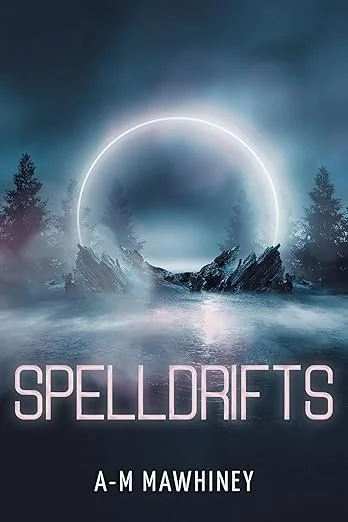
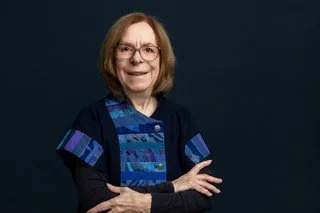
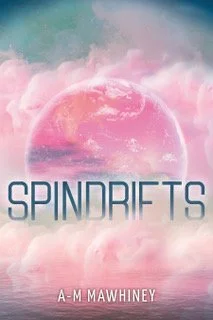
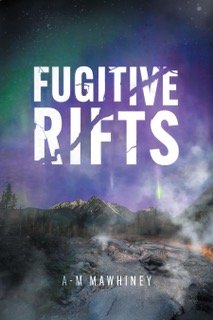
At age eight A-M Mawhiney announced she wanted to be an author. It only took sixty years. Her career, first as a social worker and then as a university professor and senior administrator, ended with her retirement in 2018. She began writing again during the first lockdown in 2020. To her surprise she found herself writing her first novel, Spindrifts. which was a finalist in the 8 th annual Rakuten Kobo Emerging Writers’ Prize and shortlisted for the Whistler Independent Book Awards in 2022. Its sequel, Spelldrifts, was released in 2023, and her latest book, Fugitive Rifts, was published in July 2025. When she isn’t writing A-M enjoys reading, taking in local basketball games, time with family and friends, and traveling. She lives in Sudbury, Ontario with her partner Dave.
Marina Raydun: Congratulations on winning the 2026 Nautilus Book Award! What does this recognition mean to you, particularly for a story aimed at young adult readers?
A-M Mawhiney: I was especially excited to have this recognition from the Nautilus Book Award because their criteria align with the themes in Fugitive Rifts: environment, kindness, community connection, working together to make the world a better place. My three books are geared to young adult readers because I have been so impressed with young peoples’ commitment to social and environmental change. They inspire we every time I encounter their leadership in making our world a better place.
MR: The four main characters—Grace, Drew, Ollie, and Dottie—seem very different from one another. What inspired you to bring these four particular personalities together, and what did you hope they would learn from each other?
AMM: In my younger days I was very shy and in my post-secondary classes I would rarely speak up. In several of my social work courses there was a young woman who was extremely extroverted, articulate and had definite ideas about how to help people and communities. In fourth year, we were both hired for a summer job as part of a team of four and I worried that we wouldn’t get along. She approached me saying, “We don’t have a lot in common, but I respect your values.” It was a thin connection, I thought at the time. But I respected her for finding something positive about me. Over the course of the summer job we discovered we had a lot more in common than either of us could ever have imagined. To our surprise we found ourselves joking about our original views of each other. In such a small group of four I was able to join into the conversations and revealed my quippy sense of humour that fed into her punchlines. This experience shifted my understanding of first impressions, ones that lay on the surface. By getting to know people, even those who seem so very different, we may discover we have much more in common than we initially thought. In what could have been a very divisive relationship with conflict we discovered a meeting of minds.
In the opening chapter of Fugitive Rifts, we learn that Grace and Drew have an issue left over from their childhood that they will need to resolve by getting to know each other at a deeper level. Dottie was used to living an isolated life with few opportunities for friendships. At the beginning of the book, she is socially awkward and anxious. She needed to experience friendships that helped her believe in her strengths. Ollie had so many losses in his life he had difficulty trusting people wouldn’t abandon him. He needed to learn to how his experiences could help other people through their own losses and challenges. I was inspired by my own experiences with my former classmate to have the four characters’ friendships start off on the wrong foot, until they moved beyond the surface of their first impressions into deeper understanding of each person’s motivations and how past and new experiences shape what happens next.
MR: At the heart of Fugitive Rifts is the idea that one seemingly small event can have consequences far beyond what anyone expects. What drew you to exploring that “butterfly effect” in the lives of these characters?
AMM: What if a small event can lead to a large shift in the way we experience our world? We have all seen, and may have known, individuals who have led significant changes that have impacted our lives. I was one of the first women in my community to be able to apply for a car loan without a signature from a father or a husband. I was 21 years old and when I signed the loan papers, I assumed this was routine until the banker told me I was one of the first women at that bank to get a car loan independently. My uncle was one of the first men in my province to apply for joint custody of his children. I have thought a lot over my lifetime about how one action by a person can shift long-held beliefs and practices for others as well.
MR: Friendship is a major theme in the novel, especially friendship that crosses differences in personality, background, and social status. What do you think young people can teach adults about forming meaningful friendships with people who are different from them?
AMM: My observation from the time I spend with young people is that they, as a generation, are more inclusive and accepting of each person’s uniqueness than when my age cohort was that age. While there is still a tendency by many adults to divide people into hierarchical groups, many young people seem to accept each person for whom they are and value differences rather than pushing for one dominant way of thinking and doing or social classification. This age-related dichotomy “in-group/out-group” is not universal, of course. However, from my experiences with young people, I am optimistic that the world will be in capable and kind hands when they take over leadership roles. Young people already are pushing for social, political, and environmental change and systems, and some decision-makers are listening to their ideas.
MR: The story touches on trauma, resilience, family, dreams, and uncertainty about the future. How did you approach writing those more emotionally intense moments in a way that would feel authentic to young readers?
AMM: I have spent most of my career, first as a social worker and then as a university professor, focussed on the experiences of young people and adults who struggle with trauma, shattered dreams, difficult family dynamics, and anxiety about life and their future. As I was writing, I would find myself connecting with each character’s inner world and the chaotic emotions that their experiences would stir up. Because I write without using a detailed storyline, I felt as though each character led me to write the intensity of their experiences.
MR: One of the most intriguing elements is the disappearance of one of the teens and the ripple effects it creates on a much larger scale. Without giving away spoilers, what made you want to take a very personal teenage story and expand its consequences to communities, a country, and even the wider world?
AMM: I have always been attentive about how we all experience our lives in relation to other people and the wider world. Very few individuals operate completely on their own. It is therefore natural for me to write about personal stories in relation to the social, environmental, and economic forces that shape our day-to-day realities. I also often think about the ways individuals, small groups, and social movements inspire change.
As I began writing Fugitive Rifts a thought popped into my head: which character disappears? And why? I was not sure where this idea came from, but I kept an open mind, watching for how it might work in the story. At this early point in my writing of Fugitive Rifts, I didn’t know the backstory to any of the characters yet because I create storylines as I write and re-write—much the way we get to know people superficially at first and then more deeply over time. Once I understood the past experiences of this one character, I knew they were the one who would disappear. This disappearance, of course, affected theremaining three who had no idea what happened to the one who disappeared. Then a large-scale event, over time, pulls the friends back together, each intent on using what they’ve learned in the meantime to make positive differences to people in their communities and beyond.
MR: The characters initially don't believe they have what it takes to succeed as debaters. How important was the debate-team setting in helping the characters discover strengths in themselves that they didn't initially recognize?
AMM: Team dynamics can change people as they discover their place in, and what they can contribute to, the whole group and its purpose. And groups have their own arc, as every team moves through phases starting as a group of individuals that, over time, becomes a group focussed on a specific goal or purpose. It was a conscious decision on my part to use a debate team, because in the beginning the four teens have very different views of social and environmental issues, often used as debate topics. In debate, instead of theses differences being divisive, having different viewpoints strengthens debate planning because it allows the team to consider all factors and standpoints on controversial topics. In preparing for debate each team member also learns about the different values and understandings their team members have on a topic. Also the research they do provides additional information that may be new to some team members, and in the often-heated discussions, there can be influences by some members that shift perspectives on certain topics. Dottie, who sees herself as inarticulate and easily distracted turns out to thrive when speaking from the heart. Ollie brings in a different perspective that often inspires a way of combining oppositional perspectives, a strength for anyone who works on teams. Drew has the confidence to be articulate and has a privileged perspective on social issues which helps prepare the team to counter arguments that keep the status quo. Grace is a confident speaker and is able to lay out a logical presentation on the debate topic and respond quickly to points raised by the opposing team. She has learned to be adept at changing course through her excellence in basketball. Each success they have in debates pulls their relationships toward friendships, and gives each person confidence in themself and in their teammates.
MR: Your previous novel, Spelldrifts, was released in 2023, while Fugitive Rifts arrived in 2025. How has your approach to writing evolved across your three novels, and what did this book teach you that you didn't know when you began writing?
AMM: My first novel, Spindrifts, was published in 2021. Once first draft of Spindrifts was finished, I thought it was “ready.” I sent copies to four friends who gently told me it read like an academic paper rather than fiction. While I was initially crushed, when I re-read the novel, I could see their point and completely re-wrote the book. This took several—actually quite a few— more drafts before I was ready to send it for a manuscript evaluation. This first novel poured out of me, and I wrote for up to ten hours a day on it. When I began Spelldrifts, which is full-on fantasy, I knew I had to pace myself and set more regular hours unless inspiration hit at an odd time. I also needed to be proactive this time in avoiding my academic voice from creeping into my writing. In Spindrifts I found myself imagining a world where I would like to live, and this world was still the basis for my second book, although the characters had acquired magical powers between the two stories, set twenty years apart. Fugitive Rifts is real-world with science fiction elements. I found the writing for this book flowed more easily, perhaps because it is set in a familiar, rather than an imagined, landscape and context. This is the first book where I have woven the story with flashbacks during the second half of the novel, rather than setting the storyline in chronological order. Fugitive Rifts also takes place over a longer time period, so I did have to pay more attention to timelines and keep the dates and events consistent through the whole story. This was a challenge for a writer who hadn’t needed to plan timelines in previous books because the stories were told chronologically.
MR: You describe Fugitive Rifts as an empowering coming-of-age story. What do you most hope a teenager takes away from the book after turning the final page?
AMM: I hope teenagers will be inspired to consider small and large ways they can improve their neighbourhood or community and take small or large action where they can have a positive impact. I also hope some teenagers will be inspired to think about the kind of world they want to live in and how they might contribute to building or re-building this world over the long-term.
MR: Looking ahead, what kinds of stories or themes are you most eager to explore next, and has the success of Fugitive Rifts changed the way you think about your future as an author?
AMM: I am currently exploring the unknown life of minor adult character in Fugitive Rifts who had no memories of her past. I want to find out what happened to her and what the future holds for her. This is more likely to be an adult book. When I was a young child I declared I wanted to be an author. It only took sixty years! Then, once I published my first book I thought I was “One and Done,” Publishing three books and, perhaps, a fourth in the next year or so, has been a very exciting journey for me. I am not sure what the future beyond this holds for me as an author, but I am thrilled to have had some modest success with my writing.