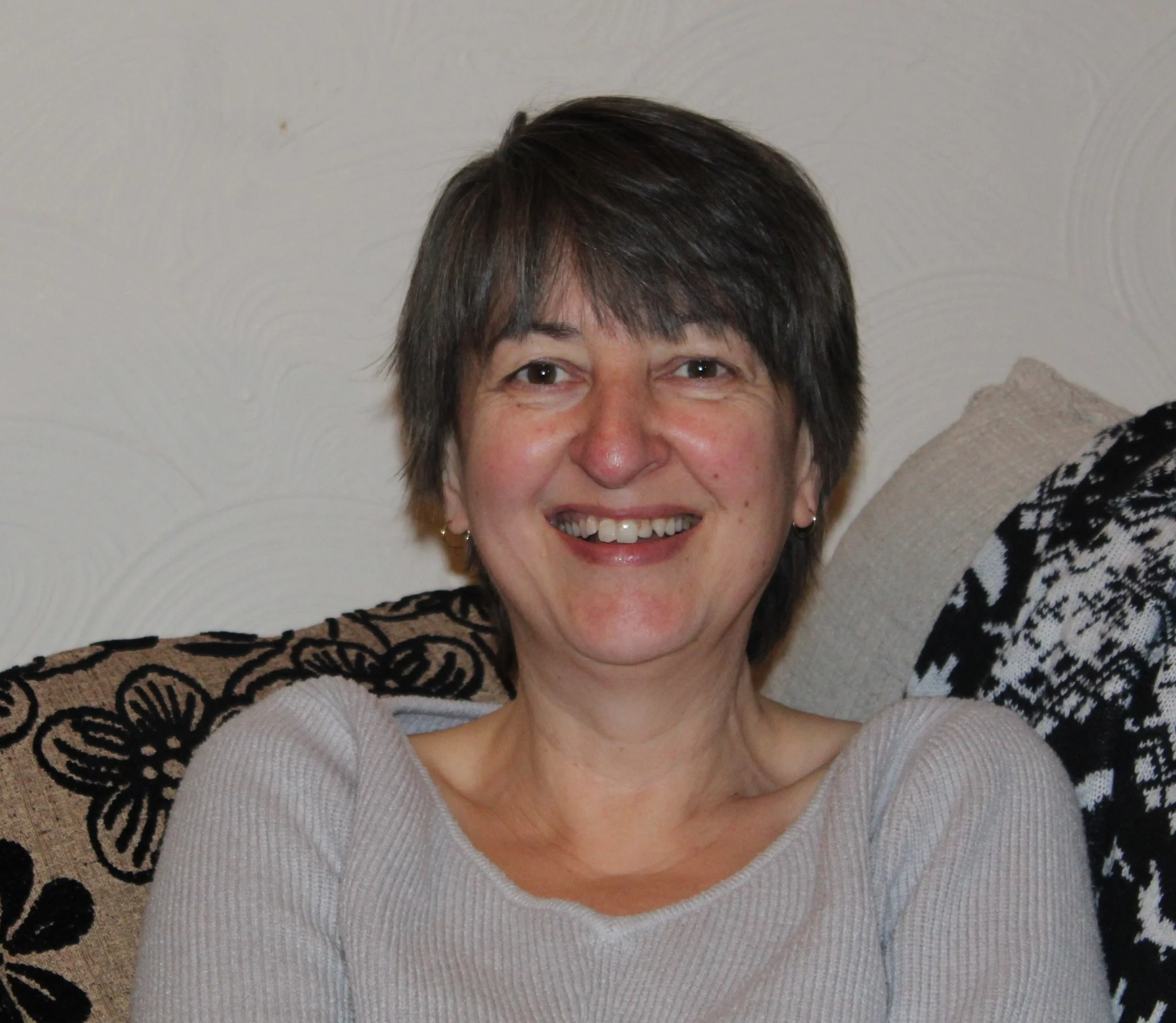
Author Interview Series-Stephanie Ellis

Stephanie Ellis

Stephanie Ellis writes dark speculative prose and poetry and has been published in a variety of magazines and anthologies, the most recent being Scott J. Moses’ What One Wouldn’t Do, Demain Publishing’s A Silent Dystopia and Brigids Gate Press’ Were Tales. Her longer work includes the novel, The Five Turns of the Wheel and the novellas, Bottled and Paused. Her short stories can be found in the collections, The Reckoning, and As the Wheel Turns. Her poetry has been published in the HWA Poetry Showcase Volumes VI, VII and VII, Black Spot Books Under Her Skin and online at Visual Verse. She has also co-written a collection of found poetry, Foundlings, with Cindy O’Quinn based on the work Alessandro Manzetti and Linda D. Addison. A gathering of her dark twists on traditional nursery rhymes can be found in the collection, One, Two, I See You. She is co-editor of Trembling With Fear, HorrorTree.com's online magazine and also co- edited the Daughters of Darkness anthologies. She is an active member of the HWA.
Marina Raydun: You write very much on the dark side of the speculative fiction spectrum. What draws you to this genre?

Stephanie Ellis: I’ve read widely since very young childhood and always enjoyed work which had a dark ‘edge’ to them – those books which might treat with the darker side of human nature (the characters of Dickens are a classic example of this) and those other stories which ‘displace’ the reader and send a little shiver down the spine. I remember reading Alan Garner’s The Weirdstone of Brisingamen and it felt as if he was writing about the world I lived in. I grew up in a very rural area which involved long walks along deserted lanes to catch a bus to school, it meant I was often out walking at dusk which was full of shadows and that sense of shadow, of something other, has remained with me. It created a fascination, a sensation of otherworldliness which I wanted to explore and this in turn takes from folklore or my experience of human nature. It’s a tug that keeps pulling at me. So much of the darkness of humans is hidden by the night, by secrets, that it’s only natural these characters and their doings seep into my writing. I like to show them as sometimes likeable but also love to deliver a come-uppance when I can. It doesn’t have to be what everyone understands as horror, ie blood and gore, though there may be some of that; the dark explores how far people will go, it allows the reader to consider ‘what if’ and its consequences within a safe environment. And I, as a writer, have a huge amount of fun with this!

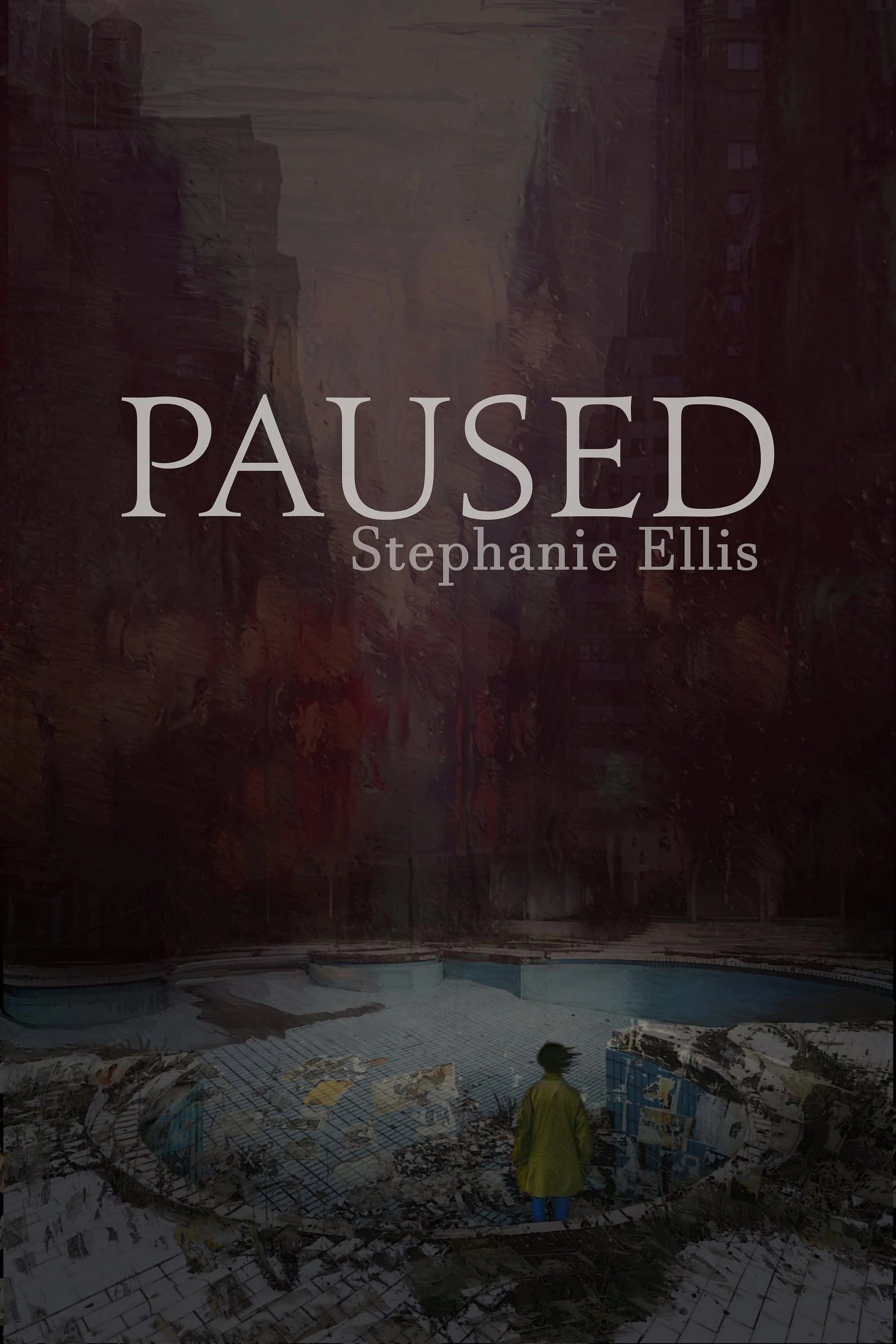
MR: Talk to me about Paused. Did the inspiration strike before, during, or after the pandemic we'd just lived through?

SE: Paused originated as a short story a couple of years before the pandemic. When critiqued, the concept was liked but generally it didn’t work as a short – it needed a bigger space and so I turned it into a novella. The concept was triggered by reading a couple of articles, one which discussed people with ‘Locked in’ syndrome and another which discussed technological advances to the extent a ‘cap’ had been created to read a person’s thoughts. Then I started to think what would it be like if sections of society started to suffer from being ‘locked in’, as if a paused button had been pressed on bodily response. I also wanted to challenge how people saw themselves. Do they always do the right thing, or do they take advantage? When you see how people are so willing to film something unfortunate and upload, rather than step in and help, I think we know the answer. Hypocrisy and selfishness can find its way into anyone at anytime – but we deny it.

MR: What is your favorite underappreciated novel within your genre?

SE: Oh my goodness, I love so many stories and they constantly change their position in my mental pecking order; most easily share the number one spot! This is such a hard question for a devoted reader. At present, I would say there’s a tie: The Grimoire of the Four Imposters by Coy Hall and Hummingbird by T.C. Parker. Both are excellent reads and have been well-received but they need a bigger audience and sometimes it’s hard to reach that.
MR: What do you owe real life people upon whom you base your characters?

SE: I don’t necessarily base characters on one person per se but I do build their personalities and behaviour on observations made over what is now becoming a long life. Being an older writer, I have experienced and seen a lot of the good and the bad in the world and in my immediate environment. This has shown what is possible, and I use that element to feed into my stories. Working with teens for a number of years until recently, fed into how the daughters of the main character (Dr Alex Griffiths) in Paused behave, their response to bullying and torment.

MR: What was the hardest scene to write?

SE: In Paused, it was the scenes where the person is struck down and how they see things happening to them and are unable to respond. There were two particular instances, one where the brother of Dr Griffiths is in charge of a demolition crane and the other, where Dr Griffiths daughter is left to the mercies of a predatory nurse.

MR: When writing this book, I had to work out how to make it terrifying and the only way to do that was to see the world from the viewpoint of a ‘locked in’ person and by keeping this to the family of Dr Griffiths it helped deliver a bigger impact.

SE: In The Five Turns of the Wheel, I included my real experience of an extremely traumatic miscarriage. Everything that character in the book experienced, the words spoken to her, the treatment in the hospital, everything is as it happened to me; and there were still some awful bits I left out because they couldn’t be worked into the storyline. This was a catharsis in a way as I didn’t realise until I wrote it how angry I still was about that treatment. At the time, I buried a lot of those feelings as I had a young family, but as the years went by I reflected more on it and needed to work through it in some way.

MR: Can you tell me a little bit about your creative process, specifically when it comes to writing poetry?

SE: For prose, it all starts with an image in my head, of a person in a place experiencing some sort of event. Then I have to know what’s going on and I simply sit ‘behind their eyes’. They might walk down a lane, talk to someone, anything but from that point, the story has begun. I have no outline, no idea of the ending – this comes suddenly usually 2/3 of the way through – I just literally make it up as I go along. This character or event does however set the subgenre – whether it be folk horror, gothic, or post-apocalyptic, etc. Quite often I will also have music playing. The right kind of music can create the mood of the bit I’m writing, help me get into the right mindset. I listen to a lot of Scandinavian metal or doom/death metal so the lyrics don’t disturb, as is the case with some German bands and the neo-pagan Heilung and Wardruna (the latter are great for folk horror as their music is often ritualised or treats of ancient sagas).

Poetry is even more organic. A lot of my poems have been written in response to an image, usually at the online literary zine Visual Verse and the image will trigger the idea of certain words or metaphors and I start to play with them. I love words and poetry allows me to experiment. Found poetry in particular is a wonderful form. I like puzzles and to tease a new original poem out of the words of another is a real challenge. Foundlings, written with Cindy O’Quinn, is based on the found poetry of dark poets Linda D. Addison and Alessandro Manzetti, who very graciously wrote the foreword. Cindy worked on Linda’s poems and I worked on Alessandro’s, then we both worked on the poems which Linda and Alessandro had written together, one of us writing a line or two, sending it off for the other to respond. It was, as Cindy has said, an utterly magical project. The response to this collection has been amazing with some of the best dark poets providing blurbs which have just blown us away. I’ve also written a novella in poetry, Lilith Rising, this time with Shane Douglas Keene. I took on the character of Lilith and he was Adam, so we could write our own bits and then react to what the other ‘character’ had done. Again this was just so easy to write. Only out recently, the response is again fantastic!

I tend to write in free verse but employ devices such as alliteration and slant rhyme to help give my work rhythm. I’m not generally one for form because of its restrictions. That being said, I have written a found sonnet, “Usurping Monster”, which will be included in Crystal Lake Publishing’s Shakespeare Unleashed. A new project, again working with Shane, also involves the inclusion of sonnets amongst the free form.

Nor is it always the visual which triggers my poetry. I am a big metal fan and purely for fun(!), I decided to take 200 of my favourite tracks and create 100 found poems from them. This was not that easy! A long song which might seem ‘mineable’ often turned out to have lots of very simple words and lots of repetition. I made sure to be extremely careful with this book, Metallurgy, which is self-published, as I didn’t want to get sued by anybody for plagiarism so I would continually check my new poem against the two source songs to make doubly sure it was unique. There is also a Spotify soundtrack, called Metallurgy, to accompany it. This was a labour of love but there were many moments when I wondered why on earth I had started it!

I’ve also been very privileged to be included in the HWA Poetry Showcase Volumes VI, VII, VIII and IX!

MR: What’s the best and worst book review you’ve ever received?

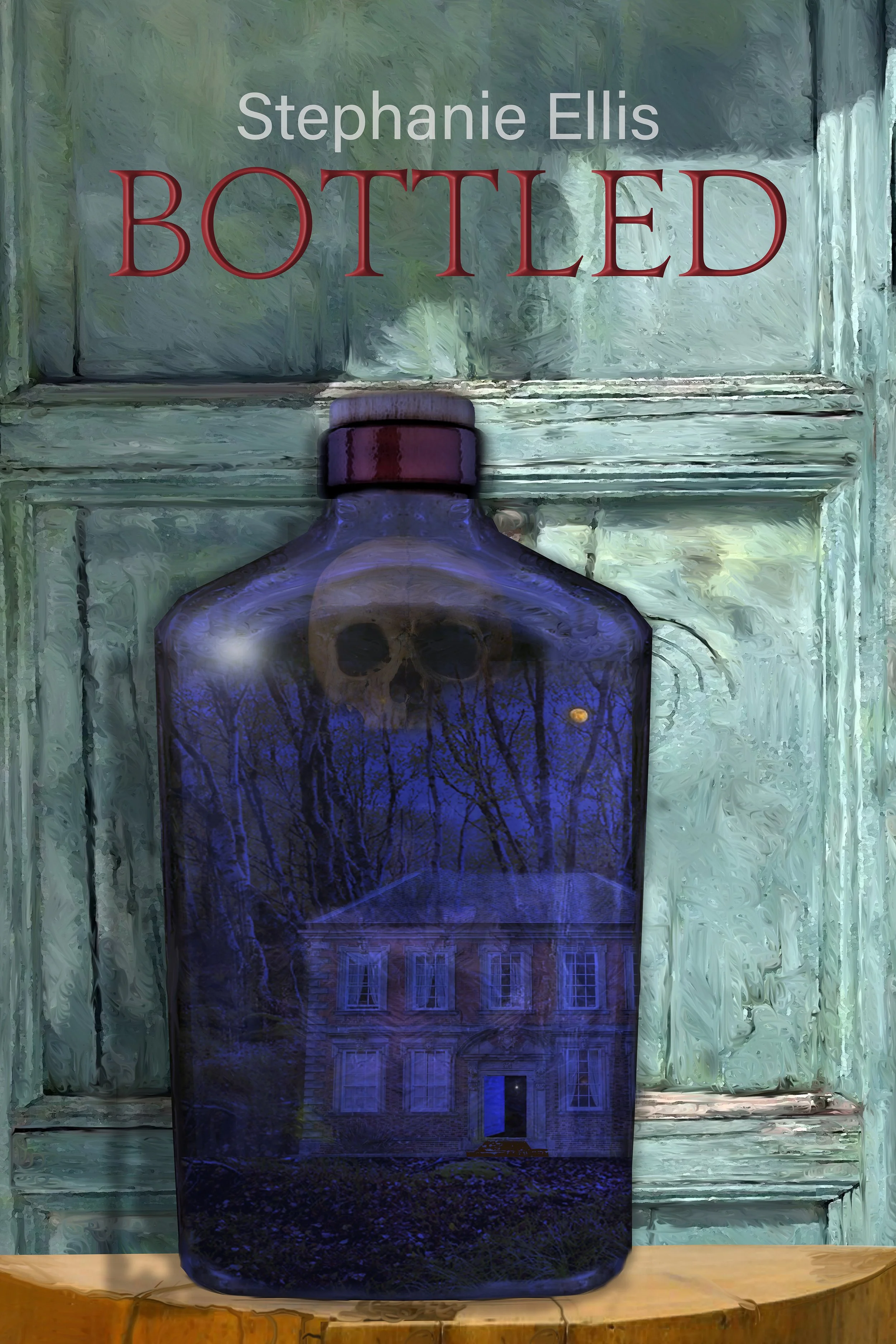
SE: I have had some wonderful reviews for all my books (Paused, Bottled, The Five Turns of the Wheel and Reborn) which have touched me deeply. One which remained with me was when Jonathan Maberry tweeted in response to Steve Vassallo of Brigids Gate Press (although the company did not exist at that time), that The Five Turns of the Wheel was ‘indeed a superb book’. Most writers seek validation and long for someone higher up the ladder to notice them and that was my ‘moment’, if you like. But I will throw in that writers such as Kev Harrison, TC Parker, Coy Hall and Laurel Hightower have continually written in support of my work. And having mentioned Steve, he and his wife Heather, when they started Brigids Gate Press, gave my books a home and have continued to support me in ways I find truly humbling. If you want to find a genuine small press, look no further than Brigids Gate. They are wonderful people discovering fantastic writers all the time.

As to the worse, I have had a few where people just don’t like the book and that’s fair enough as reading is subjective. The worst one was on Netgalley where someone had picked up The Five Turns of the Wheel because they had heard of me via Horror Tree (where I work regularly on a few things) and ‘wanted to see if I could write’. Let’s just say what they wrote was not a reflection of the book and more an attack on me as a writer. I did not respond, there is no point, and whilst it hurt, I was able to look at all the other reviews I’ve had for my books and remind myself that there are readers who enjoy my work. I have also been writing long enough now to recognise when something I have written is dire, in which case it dies a death on my computer, or is good enough to send out. That sense of where you are with your work does take time to emerge and does not completely take the sting out of rejection or bad reviews but it helps.

MR: What is your favorite genre to read?

SE: Another awful question for a reader. Naturally, I read a lot of dark fiction, and am picking up folk horror as much as I can plus a lot of what has been released in the indie world in recent years. I really enjoy crime of the Scandi noir variety and historical fiction, also modern literature with a dark edge, whether of human nature or events. I’m currently writing a dark historical mystery, Women of the Witch Eye, set in 1649 and whilst there is a murder mystery to be solved, it also brings in superstition and witchcraft beliefs of that time. I will say that I love ‘doorstopper’ books, huge books which are completely immersive (Chuck Wendig’s Wanderers, Stephen King’s The Stand, Alan Moore’s Jerusalem, Todd Keisling’s Devil’s Creek, CJ Sansom’s Shardlake series) and I wanted to write my own. Women of the Witch Eye is going to be that book! They say write what you want to read. I don’t think anyone need worry when they say they read outside of the genre they write in, to read widely is the number one advice for any writer plus if you stick to one genre, your view of it can become jaded and as a consequence, so can your writing. Stepping outside keeps everything fresh. The one genre I do not read, I’m afraid are romances, it’s just not me.

I also read poetry and am growing my collection in that respect as well. I have works from Linda D. Addison, Alessandro Manzetti, Stephanie M. Wytovich, Ilya Kaminsky and Matthew Francis amongst so many others joining that shelf at home. I think poetry will get its own bookcase in the not too distant future. And before I forget, the Prose and Poetic Eddas, the Norse and Icelandic Sagas, the Anglo-Saxon and Viking poetry, is a massive favourite. The lyricism and musicality of that work has captured my heart. For a person who loves words, the texture of their writing makes it almost edible.

MR: What are you currently reading?

SE: Like so many readers I have a TBR of both the physical and digital kind but I am also ringing the changes by using my library more. This didn’t stop my going into Waterstones recently though and buying a book because my eldest daughter had picked it up and said ‘Mum, you’ll like this.’ It was Hyde by Craig Russell, a gothic crime story featuring ancient Celtic rituals, yep, that’s me! I’ll be reading it after I finish the two below.

I’m currently reading The Wolf and the Watchman by Niklas Natt och Dag, an historical thriller set in 1793 Stockholm which would fit on any dark fiction shelf! I’m also reading The English Civil War: A People’s History by Diane Purkiss as part of my research for my current WIP.

MR: What book do you wish you had written?

SE: So so many. I suppose ultimately it would be my favourite ever book, Something Wicked this way Comes by Ray Bradbury. It’s dark, poetical and utterly awe-inspiring in use of language. I will never ever attain those heights but we can always secretly wish! A close second would be any of the Discworld novels by Terry Pratchett. His lightness of touch, his humour and satire are just spot on.

You can learn more about Stephanie at https://stephanieellis.org and on Twitter at @el_stevie.

Year One/Chapter One

Year One
Cover Art by Anna Abramzom

Year One

ONE

I don’t know when the plane ends and the airport begins. Dressed in at least two layers too many for late June in New York. I follow my overdressed Mom, who follows my overdressed Dad, as he hauls my half-blind Grandma across the ocean and now off the plane. Where is the exit? It was easy in Shannon, Ireland-there were airstairs, and so the airplane and land were clearly demarcated. Now, finally, here, in America, there’s just colorless carpet and more carpet.

I’m hot. Itchy, at least. My back is on fire, but I know better than to bring up the discomfort to the grownups. I am layered with bleached, high-waisted, and acid-washed jeans I’d proudly inherited from my sister worn on top of another pair of pants, a purple plaid blazer with shiny lapels layered on top of the prized Polish sweater, also inherited from my sister. I keep on walking, expecting to see the end of this airport somewhere ahead. My feet are soaked from sweat and stuffed into leather sandals. They hurt as if the sandals had shrunk en route. I’d been sitting for too long. I’d been awake for too many hours. The creepy crawlers in my chest are already running amok. I saw no skyscrapers on approach, like in all the movies, and now this never-ending airport. Along the way I see stalls and officials in uniforms. Someone stops Dad and thrusts a folder to the hand that’s not holding Grandma up. She is basically holding on surfboard style. How did all these people get on the plane? Because, still! Still there are no stairs, no blacktop, and no airport building in sight.

The voices-they take me by surprise. In a fog of words too incomprehensible to register as anything other than white noise, they pierce their way through the crowd, halting all four of us in our tired tracks.

“Yasha!” screams half a dozen people of various heights and widths charging at us.

There are hugs, embraces, and an oversized chocolate bar shoved into my hands. I’m still hot and recognize only two out of the six people currently assaulting us. This isn’t the arrival I spent all of last year imagining. It’s dark, in what I now understand to be JFK’s airport terminal, and the last thing I’d ingested was some airplane juice a couple of hours ago. The conditions cannot possibly be less favorable for my grand debut on American soil. I don’t have time to contemplate how many more things my imagination has been wrong about. Before I can ask my father who most of these people are, my mother, my Grandmother, and I are stuffed into a boat of a car with the only two people I’d recognized when accosted earlier. Meanwhile, Dad is ushered into something called a minivan with his cousins (whom I’d never met) and brother (met once, at the age of five). Who has our luggage? Did our custom-made fabric suitcases ever make it off the plane? I have no way of knowing this as I still don’t know how we ever got off the plane.

Our hefty chauffeurs throw English words around as their waddling car, with its ceiling fabric hanging loose and low, winds its way through airport traffic and up and down multiple figure-eight ramps. I understand some of these words, so that’s encouraging. The words are mostly “no” and “exit,” so that’s easy, of course. But still, I’ve been informed, repeatedly, that children are like sponges, and a new language is supposed to come to us quickly and easily. I am eleven. Do I count?

Surely, I will see some skyscrapers on the ride over to my paternal Grandmother’s house, I tell myself, breaking off pieces of my jumbo chocolate bar and shoving them into my mouth with less grace with each incoming square. The raspberry jam filling, a first for me, matches my blazer when some of it oozes out onto my fingers. Eating it passes the time as I take in the landscape around me. The buildings are all brown, not glassy. They are not skyscrapers by any measure. And the sky above us is thick, the sun obviously somewhere behind the stubborn clouds. How can it be so hot when the sky is so bleak?

“Sarra lives in a studio,” our old neighbor Leeza says, her torso twisted in our direction in the backseat. I hardly remember this woman from when we lived next door to her, on the top floor of the five-story walkup when we first moved to Belarus. I don’t remember the time she had to call the police when a drunk man broke into our apartment and we had no phone line to call for help. I know of her. Most of my memories really belong to my parents. These people are known as good, solid folk. They’d made their leap to the States roughly three years before us, an entire lifetime.

Studio. Now that sounds American! Grandma has always been crafty. She is way more gifted in the visual and the culinary arts than my college-educated (and currently significantly visually impaired) maternal Grandma sitting on the other side of Mom in this backseat, But why she would need a studio is beyond me. Still, the concept of a studio sounds exciting. Now, we’re talking! I’m imagining high ceilings and canvases. Even the sweat continuously trickling down my back seems a little cooler at the thought.

My Grandmother is outside when we arrive. The white van with custom plates containing my Dad and his family had already arrived ahead of us. The entire delegation is now on the sidewalk, in front of what I imagine to be the building housing my Grandmother’s infamous studio. Besides Dad, Grandma is the only one I recognize here. Sure, I’ve heard stories of my Dad’s family living here. But, outside of names, I have nothing to go on. I have no rolodex of faces to match to the roster.

It’s not a skyscraper. It’s a beige six-story building on a street lined with cars, nose to rump, colors and sizes galore. I suddenly realize that I’m hungry and outside in the daylight for the first time since our layover in Ireland. The chocolate bar is still sticky on my teeth. I understand that I may also be thirsty. My plump Grandma, overjoyed to have so many mouths to feed, tells me to go on inside. Excited to see this studio of hers, I all but prance in the direction of the building door, throwing my weight, all my layers, against it, but it doesn’t budge. Pain stabs my shoulder, but the door is still closed. There’s practically a rebound, causing me to stumble backward onto the curb. The rejection of it sends moisture to my sleepless, tired, eyes in seconds. Suddenly I am a toddler, I want to run back to Mommy, but all I hear behind my back are chortles. Now everyone’s face is wet for different reasons.

My nose folds in on itself when my studio-resident Grandma finally shuffles to my rescue and opens not one, but two doors (the second one requiring a key). The building is smelly. It’s not the odor of the stale urine that was the signature of my Soviet building lobby. No, this is more complex, but none of the ingredients are known to me. Maybe something between wet sneakers, moist cigarette ashes, and unfamiliar cooking. Maybe. It’s not entirely offensive. but it’s not pleasant, either. What it is is pervasive. You can’t ignore it. I can’t. But the lobby is spacious, the ceiling tall, and the moldings ornate. It’s a literal world away from the rectangular, cement block boxes I’d grown up in. It’s beautiful. I can picture a studio here.

“Marina, do you want to take the stairs?” asks a woman with auburn hair that looks like it was styled as a pixie cut sometime in the distant past and has been thoroughly overgrown. I met her only minutes ago, but I heard of her, sure. She’d written instructional letters to us ahead of our migration, including such valuable nuggets of information as “make sure to get a haircut before coming over because haircuts in America are prohibitively expensive” and “bring needles and thread.” She’s taller than average and trimmer than most of the women who raised me. It’s nice to put a voice and a face to a name, particularly because it sounds like she already decided to like me. She’s halfway up the steep, long flight of stairs. “It’s only three flights.”

“Isn’t there an elevator?” I ask, hesitating between the woman I now know is my Aunt Basya and my Mom. My mother has been handed the baton that is her mother sometime back at the airport and is still holding on to her. The stairs are definitely out of the question for them.

“See you up there,” the lady calls as she continues to climb, her voice too hoarse for someone who I now know never smoked. She disappears behind the second-floor banister before our delegacy boards the elevator.

Unlike all the apartment buildings I’ve ever visited, the elevator here has a door with a handle. This door, too, proves to be heavy. I’m years from learning about symbolism and metaphors, but even as a sixth grader, I feel like I should pay attention to all this resistance. Again, my Grandmother comes to the rescue, pulling the door open with ease once the one behind it slides open. We can observe the process through a diamond-shaped window in the first door. Hesitantly, we step inside. The cabin is hot pink, a stark contrast to the beige-brown, linoleum elevators I’d ridden prior to June 25th, 1994, the day of our arrival to this new land. It’s also larger. There’s a smell in here, too. A stuffy, deeply in need of being aired out odor, but again, it’s not urine, which is refreshing. The sliding door thuds closed and the box thrusts us upwards. Before those of us who haven’t ridden this thing for the past three years can shriek, the door slides open. We are informed by the sticker sign on the inside of the matching heavy door up here that we are indeed on the third floor, as promised. Pushing it open from the inside proves as difficult as pulling it open downstairs. I let Grandma Sarra do the honors, aiming to avoid embarrassing myself for the third time within minutes.

The studio I’d spent an hour picturing isn’t much of a studio at all. Certainly, not with this lighting. Turns out, a studio is just a one-room apartment. This is misleading, or at least it should be. My first residence in America would be a smelly, cavernous room with no partitions. I feel like I’ve been lied to. Our kind, old neighbors should’ve been more specific. I can feel my muscles begin to pulsate, and my skin begins to prickle. I may cry. We are quickly brought up on the apartment sizing lingo as we face a row of relatives situated behind the long table full of bowls and dishes. The smiles, the tears-they are all around, no square centimeter spared. Between all the prying eyes, the pale light in what I now understand is the only room here, and the unfamiliar mechanical noise coming from somewhere deep in the aforementioned lone room, it’s as if this non-studio is spilling. “You’re so big” comes at me from every which way. This is a lie from most of these people as they have never met me before-there is no point of reference for this to be anything but a platitude. I ask for the bathroom just as my mother’s sedatives wear off, and she begins to wail.

The bathroom is just as pink as the elevator, the tile so bright, it hurts my stale eyes. Of course, there’s a smell here too, which I already know to expect. I’m a quick study. It’s not Unclean in here, and it isn’t the food smell from the main and only room of the studio. It’s sour and heavy. I throw the shower curtain to give myself something to do after I pee. The toilet is yellow, intentionally not matching the walls. I see now that the bathtub, too, is yellow. The fact that the toilet shares this room with the sink and the bathtub is bewildering enough. There’s a window in here too! This isn’t familiar. Where I come from, the toilet room and the sink and tub room were two separate rooms with two individual doors. And there were never any windows in either. Arguments can be made to justify or condemn either design, but this isn’t what I’m thinking about. It’s also not only the shampoo and soap containers lining the windowsill that I’d seen shiny advertisements for back home and that take my breath away. Now, what at once takes over my entire being is what I see on the other side of the window-namely the iron fire escape. Those I have seen before, but only in the occasional American films my Dad would borrow from someone. We had a VCR that my Grandmother, Sarra, had brought back from her visit to the States roughly a year before her moving here. It was that VCR and a few proper Disney store t-shirts that she’d brought back from her exploratory trip where she’d visited her son (my Uncle). Much to the public dismay of his wife, the one with elevatophobia. I don’t remember any other American goods, but surely there must’ve been prized pantyhose and socks on little hangers. Grandma isn’t a fool. We didn’t watch many movies on our rare VCR, but Home Alone was my first introduction to American cinema outside the Sunday Disney hour introduced to Soviet kids roughly around the fall of the Soviet Union. There haven’t been many American films in my life, mostly TV programming limited to either Soviet films or Latin American telenovelas that had taken the entire country by storm. But I must’ve seen those metal grates somewhere because the reaction they prompt in me is physical. I stumble back away from the yellow bathtub. I wash my face and yank my crazy checkered blazer off. The mirror above the sink confirms that I look as tired as I feel. It’s been a long day.

I was excited to get on the bus to Minsk. My Uncle had arranged for us to travel with all the family and friends who wished to see us to the airport. True, I know my sister is staying behind, and I know it is going to gut my family in a permanent way, but I am leaving. Leaving! Soon I won’t be the only Jewish student in the entire school building. Soon I won’t be a “kike” with a big nose. And soon, I will be able to have access to such inaccessible things like yogurt and pizza. Even at eleven, I crave reinvention. Land of opportunities and all that. No need for tears because we are about to improve everyone’s lives. Besides for Dad, I’m most eager to leave Belarus. Grandma, my Mom’s Mom, is too, but she doesn’t speak much anymore. This makes us traitors in Mom’s eyes.

“I can’t believe we’re actually doing this,” I hear Mom tell Aunt Nadia as I walk ahead of the two, practically giddy as our last day in Belarus is coming to a close and the plane ride dawning nearer. “We’re just fine here! If Slava doesn’t see a reason to leave, why are we so special?”

Aunt Nadia is our best friend. Our families spend at least three evenings out of any given week together. A patient and wise woman, she is also a nurse with access to any and all medications our family has ever needed. And, for this expedition, Mom needs quite a few.

“Fine? How is this fine?” I demand when I stop in my tracks and whip around to face the two women. “You can’t even buy your daughter a banana!”

I don’t know why I let this escape my lips, but her raining on my “I’m leaving to America” parade leaves me seething. This seemed like a good argument when I’d hurriedly formulated it in my head. Once it is out, however, when I see Mom’s face contort, I immediately feel shallow and vain. It doesn’t help that Mom breaks into laughter that doesn't sound jovial. She certainly isn’t laughing with me. She is angry. My stomach does a flip when I turn my back to my Mom and her friend, again, my face ablaze. I quickly replay the exchange as I continue walking a few paces ahead of the grownups.

Why is she laughing? Why can’t she stop? She has no verbal retort. June 25th, 1994

But what I said was true. We can’t afford to buy bananas, or kiwis, or fancy shampoos, or this new product-tampons. Not that they are so widely available to begin with, but even when they are, they are outside our price point. And I’d never had pizza. America is where I will be able to have these things. Affordably! Dad will get a fantastic job that will make use of all of his skills. We’ll live in a skyscraper and soon my sister will see the light and join us. Mom will be happy, and Grandma will regain her eyesight. All so logical. My God, this much is obvious! Now I really can’t wait, if anything. One more night and I will be airborne.

Not surprisingly, I couldn’t sleep that last night in Belarus, the mattresses stretched across the aisles of our rented bus, passengers sleeping head to toe. I am practically exhilarated to hop off that mattress come the earliest of dawns and run through those automatic airport doors, but that’s also when mass hysteria begins.

Mom is preloaded. Our family best friend, practically our concierge doctor, rightfully planned on providing Mom with sedatives for her trip over the Atlantic. Unfortunately, she didn’t pregame early enough, and just at the metaphorical border, where our family is instructed to part, my Mom breaks down in the most guttural of cries. My sister follows suit, her new husband holding her back while I tug at Mom to keep moving. Dad is busy propping up Grandma, who would crumble without support. It’s up to me to not forget Mom on this side of the border. To blend in the chorus. I do my best to harmonize, but the higher decibel level is not something the situation requires from where I stand. We will all see each other in no time. I am sure of this. This is how the whole reunification of family works. That’s why my Dad’s entire family seemed to have moved at three-year intervals. Why the theatrics?

As a baby, I’d apparently flown lots, but all of these flights were before the age of four. I remember none of them. I have only movies to go on for any visualizing of what an airplane ride might feel like. I am guaranteed to vomit at takeoff. My Mom had warned me before the drugs kicked in, especially as I was known to hurl on car rides when I was younger. Now, Mom’s sedatives quickly setting in, she sits in the middle seat, no words escaping her now fixed lips. Grandma sits stoically at the window. Dad and I are across the aisle, me with the barf bag in hand. I keep the bag at my lips for most of the trip, my Dad distracting the both of us with nervous jibber-jabber. This is refreshing given that I’d grown up with the man mostly silent but for necessities. I have no way of knowing this yet, but the experience of the flight itself, if encapsulated, is a clear and concise summary of my year to come: blind and mute Grandma, swollen-eyed and stoic Mom, and a Dad who’d found an unexpected companion in his 11-year-old. This is a chance for him to get me on his team, and he doesn’t let that chance pass him by. He gets us to visit the cockpit when both Mom and Grandma remain unmoved. Only one of them is in this state by medical induction. And when we spend a couple of hours in Shannon, Ireland, he buys me ice cream, which costs dollars. Real-life dollars. We don’t have those to spare, arriving in the States with $3000 total, so I know not to take the gesture for granted.

Now Dad is busy being hugged by cousins he’d grown up with but hasn’t seen in decades, and I am in the bathroom for the first time since Ireland, where Mom and I embarrassed ourselves for the first time west of the proverbial Iron Curtain when we couldn’t get the sink to work. In Grandma’s pink bathroom, the faucet works just fine, but back in Shannon, there was a pedal we had to step on to get the water to run. Now, here, all I have to do is turn the hot and the cold to balance it all out, but that doesn’t make me feel better. Instead, this chilling, misshapen, previously unfamiliar blob of ice invades my chest with a decisive jab. I am no longer hot. I’m cold now. Freezing. I pull the shower curtain closed, shielding the fire escape again. My body’s buzzing. I rejoin the loud living room, wedging my way back between Grandma Anna and Mom on a wooden bench stretched across a few chairs aimed at creating more sitting space around Grandma Sarra’s crowded table.

The dishes are not exotic. Nothing in front of me is new, really. The difference is in quantities and beverages. There are salads and stews I’ve been eating since childhood, but there are more of them here. A variety we’d never had even on New Year’s Eve or a birthday. And the Sprite-that’s new. Pepsi I’ve had before. Fanta, too. This green plastic bottle, however, is new. The drink is cold and crisp. It’s refreshing. I like it and for a few minutes I feel better.

The slowing of my pulse doesn’t last, picking up with every new hello and a gush over how big I am. As the evening continues to drone on, my brain hardly processes that it’s Sunday evening now. I have barely any rest since Saturday morning in a different time zone. Fresh faces continue to come and go-saying hello, sitting down for a bite, and leaving on account of having to be up early for work the next morning. I’m on a conveyor belt. It’s hard to tell if it’s a welcome dinner or a wake.

And then it happens, the Moment the activated cloud my belly has been anticipating: a woman I know only from photographs, my cousin Alla, walks through the door. She’s tall, her black hair in a static, thick bob, and she’s smiling ear to ear as she strides towards us, practically levitating. She looks almost genuinely ecstatic to see us. I’ve never met her before.

“Hi! Welcome!”

Like her Mom’s, her voice is hoarse. Her teeth are bared, but her words are cheery. Her black eyes seem to want to connect with mine, and I want to accept the challenge. But instead, a sob escapes from my throat. I feel all eyes turn to me, but I am more surprised than any of these people by what we all know we just heard. I attempt to stifle it, mask it as a cough or a sneeze. I blow my nose demonstratively as my cousin continues grinning in my direction, unfazed. Her determination doesn't help and another sob erupts, louder than the one before. I can’t stifle this one, and I can feel my face begin to crumble, to fold in on itself. This first day of my new brilliant life is not working out. Trying to think on my feet, I attempt to mold my melting expression into a hello to my cousin. She is my Uncle’s daughter, and all I know about her is that both my Mom and my sister are convinced she is my Grandmother’s favorite. More sobs erupt, and before I can embarrass myself further in front of people I either haven’t seen in years or never met at all, I hightail it back to the pink bathroom with the rusty fire escape.

I breathe over the sink, or at least I try to, my palms gripping the sides of it. When that does nothing I run the tap ice cold and begin to rub my face. No matter what I do, I can’t seem to shut off my throat. I cry and cry harder. Something about the brunette stranger out there seems to have broken some kind of dam, and I obviously don’t have the requisite capacity to plug it back up.

There’s a knock on the door, and then a bang. It’s Mom. I’m not at liberty to pretend I don’t need help.

“What are you doing?” she hisses once inside.

“Slava,” I sob to my own surprise while Mom fiddles with the new type of door lock.

“What about her?” she breathes. She hasn’t said any words to me since we departed Minsk.

“Why? Why is Alla here when my sister is not?!” I cry, my breaths now shallow and rapid. I’m heaving.

“Darling, we knew this. She couldn’t come now,” she tries unconvincingly.

“Then I don’t want to be here!” I scream, suddenly, unable to pump the breaks, words flying out of me faster than I process the thoughts behind them.

“I don’t either,” she admits. No big revelation here. She’s been telling anyone who would listen (and even those who wouldn’t) that America is a terrible idea forced on her by her husband. “But we can’t just turn around and leave now. We have to wait.”

Not unexpected or illogical, but it’s not what I want to hear. I can’t breathe with all this pink around me. The window here is open, but there is no ventilation, no draft with the door closed. But the open window does give me an idea.

“Look!” I pant, pulling the shower curtain open. “Look!”

“What?” Mom relocates from the toilet to the edge of the bathtub. “Is there someone out there?”

“No, not now. But I saw these in movies. That’s where they sell drugs!”

I don’t know where I get that from. I haven’t even seen that many American movies. And, of the ones I’ve seen, none that I consciously remember involved drug dealing. Still, somehow, this is vivid in my memory and/or imagination. This is important.

“Darling, there are no drug dealers here,” Mom says, her tone unconvincing, and I just know there’s nothing she wants more but for there to be drug dealers out on that fire escape to give me enough credibility to justify running back.

“I want my sister!” I wail.

Grandma Sarra and Dad taking turns knocking on the door. Ashamed at failing on my first day in America. I don’t want to see anyone. I want Mom out of here, too, now that I see she’s of no help. I’m so tired.

And then Mom has an idea-the Belarussian sedatives. She zooms out and back in, armed with a pill bottle and a cup of the new green soda.

I am to swallow two, which I do.

And then it all goes black.

© Marina Raydun, 2021

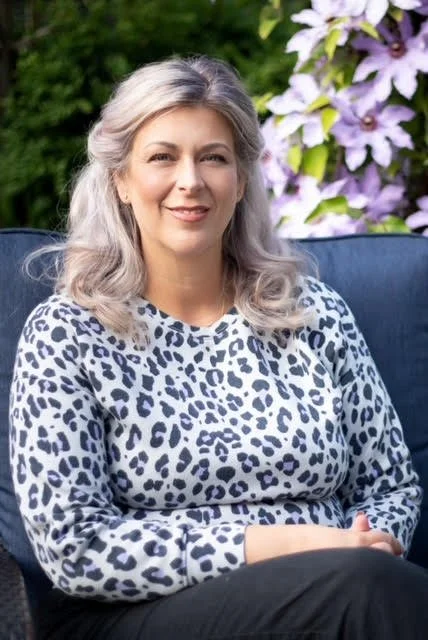
Author Interview Series-Diane Bator

Diane Bator

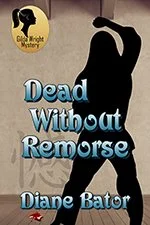
Diane Bator is a mom of three, a book coach, and the author of over a dozen mystery novels and many works-in-progress. She has also hosted the Escape With a Writer blog to promote fellow authors and is a member of Sisters in Crime Toronto, the Writers Union of Canada, and a board member of Crime Writers of Canada. When she’s not writing and coaching authors, she works for a professional theatre. No surprise she’s written her first play, which may lead to more.

Marina Raydun: This may not be easy to answer but do you have a favorite within your Wild Blue Mysteries, Gilda Wright Mysteries series?

Diane Bator: I think my favorite book in the series is The Bakery Lady. I didn’t set out to create the dynamic between Leo Blue and Christina Davidson, it just sort of evolved from the instant they met and took on a life of its own. They’re both characters who’ve lived rough lives and their connection was fun to write about. Leo was a sidekick character in book 1 and 2, so letting him have his own story was something readers had asked for!

MR: What’s the most difficult part about writing characters from the opposite sex?

DB: I’ve always been surrounded by more male role models than female, so I’ve used a lot of them to influence my male characters. It’s fun to have those men work with some pretty headstrong women, but there are more physical components of writing men that I certainly don’t know firsthand. Any more than a man would be able to write about a woman with PMS! LOL!

MR: How do you select the names of your characters?

DB: It’s weird that most of the time they just come out of the blue. Seriously! The name Laken in my Glitter Bay Mysteries came from the side of someone’s metal water bottle. Sometimes if I’m stuck, I’ll find a name on a book or a baby name website. If I’m looking for something specific, I’ll find lists of baby names that give what the name means.

MR: What’s the best and worst book review you’ve ever received?

DB: The best review was when the first reader I met in person told me she loved my books and was awed that I lived in her hometown. It was certainly the most memorable! The worst (or at least most confusing) was someone who left a review to say they didn’t like the characters, didn’t like the story, but they could relate to the main character.

MR: What is your favorite genre to read?

DB: Actually read many genres as a book coach/editor. I love mystery, it’ll always be my number one. I also read some fantasy and sci-fi books as well as romantic suspense and women’s fiction.

MR: What are you currently reading?

DB: My current read is a sci-fi called M.E. Unleashed written by a friend of mine, Roderick D. Turner. It’s a gripping exploration into the awesome potential of the human mind, and the importance of empathetic connection in our world.

MR: If you could have drinks with any person, living or dead, who would it be?

DB: This one is tough. I think Janet Evanovich would be a good choice since her books inspired me to write my own. I’d love to hear how she got started and how she keeps going with her Stephanie Plum series among others.

MR: What book do you wish you had written?

DB: I admire the Harry Potter series for being well written, entertaining both adults and kids, and being a total world that readers can get lost in. I’m not sure if I’d want all the headaches J.K. Rowling has had to endure though. Something like Eat, Pray, Love is up there as well although as Elizabeth Gilbert says, it’s stressful to follow up a great success though.

MR: If you could cast your characters in a Hollywood adaption of your book, who would play your characters?

DB: Katie Mullins could be played by Rose Leslie. I’d love to see Lucy Stephens portrayed by Mila Kunis. Maybe Chris Evans as Danny Walker. Jason Mamoa as Leo Blue would be amazing! Mimsy Lexington would come to life with Lily Tomlin in her role.

MR: What do you think about when you’re alone in your car?

DB: Whatever book I’m working on at the moment. Sometimes, I come up with great new scenes or even whole new books! That and packing up all my worldly goods and taking an adventure. Somehow, I don’t think my cats Jazz and Ash would be up for a road trip. They don’t even like the drive to the vet!

To learn more about Diane Bator, please visit her website at https://dianebator.ca/ 

Her books are available through her publisher Books We Love at: https://bookswelove.net/bator-

diane/

Cover Reveal: Year One

Year One is a fictionalized memoire about my first year in America. It’s a labor of love, courage, and self-examination. It's been a long way getting here and I'm not done. Currently, I'm in the revision stage. Then will come the editing stage. I hope not to lose my nerve by then.

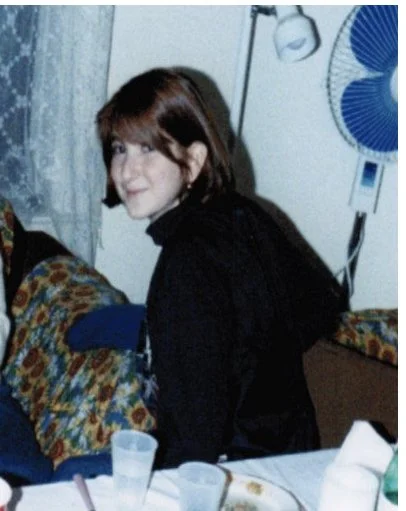
The cover art concept for this project came very quickly and organically for me. This isn’t always the case but here, it just made sense. The inspiration came from this—the first picture taken of me on American soil.

It was taken at a one-hour photo (sorcery!!!) on Kings Highway, in Brooklyn, NY-just a block from where I was living at the time. Of course, I couldn't think of anyone better to collaborate with on this project than this brilliant artist friend-Anna Abramzon. Two immigrant kids, Anna and I are somehow connected in some sort of creative realm. Maybe in a parallel universe we create together? In another life? Who knows, but we did find each other randomly on social media a few years ago and quickly discovered that we seem to understand each other like no other. When I mentioned this idea to Anna, she immediately understood my concept and ran with it. The result is pure art: some fact, some inspired fiction. I hope you like this as much as I do. Thank you, dearest Anna. You managed to go inside my head and put my ideas on paper.

First Six Months of 2022 in Books...

It’s that time of the year again!

Namely, it’s June. This is usually when I am busy hyperventilating as the school year wraps up and I am faced with my attachment issues. However, it’s also when I usually share my year in books so far-sharing some recommendations and reviews with you.

Here goes then (because I do have to get back to all the hyperventilating)…

The Fall of Marigolds (Susan Meissner) 4-stars

I don’t read much historical fiction but was drawn to this title because of my interest in immigration history and Ellis Island itself. It was a well-researched, vivid novel with a good amount of heart.

The September of Shiraz (Dalia Sofer) 5-stars

I received this book as a gift in a holiday book exchange. It is the first physical book I’ve read in a while (I usually listen on Audible). Set during the early days of Iranian Revolution, this book is eloquently written. I could not put it down.

Woman No. 17 (Edna Lepucki) 4-stars

An interesting premise and some good observations of mothers and children with special needs and their relationships. I found it painful in its insight, at times, actually. Which is exactly why I would recommend it.

The Girl With Stars in Her Eyes: a Story of Love, Loss, and Rock-and-Roll (Xio Axelrod) 2-stars
I was really looking forward to this one because it was so highly recommended on various book lists and blogs. Unfortunately, it disappointed rather profoundly, both in plot and character development. It’s just flat and predictable all around. I hate to leave negative reviews (and don’t, actually), but I do not recommend this one…to anyone.


Rodham (Curtis Sittenfeld) 5-stars

What a cool concept-to take a real person and run fan-fiction with it. It gives a satisfying ending for Hillary fans. Recommend.

The Lost Daughter (Elena Ferrante) 5-stars

A painful read, and I mean it in the best way. Highly recommend, particularly to mothers of daughters.

Signs of the Survival: a Memoir of the Holocaust (Renee Hartmans) 5-stars

I bought this at an elementary school Scholastic book fair. I am hardly the target audience for this but the book is a true story of real sisters (one deaf, one hearing), making it through the Holocaust without their parents. I do recommend this to middle schoolers and their parents alike. It’s not very graphic and a good introduction into personal narratives of Holocaust survivors.

Drive Your Plow Over the Bones of the Dead (Olga Tokaczuk) 5-stars

It feels silly to critique a Nobel prize winner so I hardly know what to say. An unusual read with an unexpected ending, I’ll say this much. Quirky and poignant.

The Personal Librarian (Marie Benedict) 5-stars

This was probably my favorite pick by MR BOOK CLUB. This, too, is historical fiction but based very much on thorough research. What an incredible (and almost unbelievable) true story of Belle DaCosta Greene! I want to go back to the Morgan Library now.

I Must Betray You (Rita Sepetys) 5-stars

This is a YA novel about Romania in 1989, when it finally overthrew its communist government. Yes, this is another historical fiction. I have to admit that this much historical fiction is quite out of character for me but I must say I highly recommend this title as well. I had no idea what life in Romania was like though I, too, grew up behind the Iron Curtain. Highly recommend to anyone curious about what life was like under communism in late 1980s (probably more for YA).

All’s Well (Mona Award) 5-stars

Oooh, this one I could not put down. My favorite psychological thriller in a while, that’s for sure. Very raw and a bit reminiscent of Twin Peaks from time to time (and I love me some Twin Peaks). Spooky and character driven in the most delicious of ways. Highly recommend.

Currently, I am reading The Sentence by Lousie Eldridge. It’s another pick of MR BOOK CLUB. I’ll report on this one when I finish it.

So… what are you reading? Anything to recommend?

Author Interview Series-Christine Milkovic Krauss

Christine Krauss

A NOTE FROM CHRISTINE:
I am a full-time essential services worker and mom of two primary school-aged children. My kids enjoy choosing books from the school library and I'm always genuinely impressed with the messages of acceptance and kindness in the stories they select for us to read together. During the pandemic, we had to get creative to keep our home an exciting and positive space that we all wanted to spend a lot of time at! Our entire family loves animals, so we decided to foster a litter of kittens over the Christmas Holidays. They brought so much joy into our lives, that we planned to continue to foster animals as much as possible! Then we saw Teddy. Teddy just belonged with our family and we knew it the moment we met him. Since that day, he has made our family feel complete. His uniqueness and character have inspired a series of stories that we hope to share with other avid child readers that love animals!

Marina Raydun: First things first-I cannot wait to read Teddy Loses His Ears with my kids. What moved you to write this story in particular?

Christine Krauss: Aww, Thank you. I decided to write Teddy Loses His Ears because it is a true story about my foster cat, who lost his ears to frostbite. I thought it was an important story to tell that can educate about pet care needs and serve as a lesson about making assumptions based solely on appearances. In this case, judging a cat by his ears. Teddy is a loveable character and I believe his story has many layers that children are able to connect with and relate to about self-esteem, disability awareness and being kind.

MR: Our world sure needs more children’s literature about kindness. What books served as inspiration for you? 

CK: My children bring home so many books from the school library, it’s hard to pick just one. But there is a book written by Michael Hall titled “Red” about a mistakenly labelled crayon, that I found particularly inspirational and I loved how it simplified some pretty heavy subject matter while the message about being true to yourself is very clear to audiences of all ages.

MR: If you had to do something differently as a child or a teenager to become a better writer as an adult, what would you do?

CK: I wouldn't do anything differently! I’ve always had a natural story telling ability when I write about real life experiences or topics that I am passionate about. I shine when I write speeches for events with a theme I can somehow make relatable, or describing people that I an honouring. Travel blogging my adventures or becoming inspired from a moment, I try to bring my audience along with me on the emotional journey by being raw and honest about the events I am describing.

MR: What is your favorite genre to read? 

CK: My favourite genre to read are crime novels. I love stories that take you on a clue solving adventure, especially when the protagonist view is law enforcement. James Patterson books are a favourite of mine.
MR: What are you currently reading?

CK: I belong to a Book Club that consists of eight fabulous ladies. We take turns making recommendations every month. We just finished my pick “Her One Mistake” by Heidi Perks and it was excellent. I’d recommend it to any mom. I’m currently reading “The Night She Disappeared” by Lisa Jewel. I’m really enjoying it so far, and we all agree, this authors books never disappoint!

MR: How did publishing your first book change your writing process?

CK: I don’t think my writing process has changed, but my confidence has clicked on and I believe in my own ability to story tell cohesively and see opportunity and become inspired from the simple every day things.

MR: Is there one topic you would never write about as an author? Why? 

CK: I really don’t feel anything is off the table for discussion. Books are knowledge. Therefore, the more we expand beyond our topic limitations, only then are we able to learn and grow. Part of the reason I wrote Teddy Loses His Ears is because I wanted to show children that everybody has a perspective based on their experiences. It’s OK to ask uncomfortable questions to learn about differences and become accepting through understanding.

To read Teddy Loses His Ears, please visit Christine’s Amazon Page.

How I Became a Seventh Grader

How I Became a Seventh Grader

Excerpt from Year One

This lady with short and curly fire-truck-red hair  in front of us appears to be well into her 60s. She sits deciphering all the documents we just dumped on her desk, eyes squinting and widening as if she’s trying to focus a lens. She hangs over the desk more than she sits, her bossoom resting on our interpreted documents, making the exercise appear more comical than likely intended. From her perch, she eyes my translated birth certificate and report card. We don’t have an interpreter with us here and there is no way the city can possibly provide an army of those for this crowd. We can only hope that dad’s English together with my own will suffice for this outing.

The three of us hold our collective breath when the woman clears her throat and picks up my report card to waive around triumphantly.

“This is good! You are smart!” she announces loudly, as if her volume can make her words sound any less foreign. But we understand the sentiment and beam accordingly. “5 means A, I know this,” she adds, knowingly, with a wink.

She’s right-that is what it means. And I have all eight of those. Technically, it should’ve been six 5s and two 4s, but our town’s resident translator and my own English teacher for that whole one year of foreign language instruction did the translating, and my 4s in Belarussian language and literature were not deemed important enough to ruin my otherwise pristine paperwork. This wasn’t inconsistent with my own attitude toward the two classes.

“Raydun, I won’t give you a 5 for your big brown eyes alone,” my massive Belarussian teacher used to tell me whenever she’d notice me coast with a solid 4 without much of an effort. She never hid her distaste for me or my Semitic last name.

“Then don’t. I’m fine with my 4. I’m never going to use Belarrusian in America!” I would always respond, somehow confident that this small town was temporary, just waiting for my real life to begin. Still, our old translator fudged it up just a smidgen to help me look better at this very moment. 

The tiny lie doesn’t bother me. I earned the rest of these 5s through much sludge and quicksand of anti-semitism and awkward tweening at the height of collapse of Soviet Union, most of my teachers showing not much more than tolerance for the likes of me-the few remaining Jews with a path and ability to move far and away from the rapid decay all around. My 5s may as well have been 10s given all the upstream swimming I had to do since preschool-somehow the only Jewish kid across grade level since the late 80s, my family late to the departing boat. I need this new life here. I need it like I need oxygen.

“You were born in 1982. You’ll be twelve in a couple of months, right? So you’ll be starting seventh grade here, ok?” the gelatinous figure with a kind face informs us, without looking up from the multiple signatures she’s been planting on the forms we’d haphazardly filled out ahead of time.

“No! Not ok!” I pipe up, my heart already in my throat and swelling. “I finish five in Belarus. I go six now!” I’m hot in my turtleneck, sweat already prinkling against the fabric, but I am also shivering. The combination is terrifying. I’m free falling.

“She go six, not– not seven,” my dad attempts to come to my rescue, both of our faces flushed now. Mom’s head turns from one of us to the other, seeking translation that neither can currently provide.

“Look at all your 5s! You’re a smart girl. You belong in seventh grade.” The woman is completely unbothered by our pleas. My dad’s long forgotten stutter of his youth seems to be making a comeback, but this lady’s eyes remain unmoved, her glasses resting on top of her soft, poofy head now. She seems genuine in her expression of good faith and optimism and I can see my dad’s resolve begin to dissipate.

“Ok,” I hear him say as panic rattles inside me, matching the drumming in my ears. I can’t go to seventh grade! I know next to no English and now I am to skip an academic year?

“No, I can’t. Please. I go six,” I give it one last try. The woman is not listening. She is packing up our documents, ready to send us on our way. There are so many families still waiting outside. Other than tempting the locked and loaded tears into springing from my eyes, my begging will accomplish nothing. The grownups agreed. I’m eleven and can’t formulate a grammatically correct sentence in English. I have no leverage here. Clearly, this isn’t my life yet. This is temporary. The real one will start later.

Keep the Faith, Michael Jackson is singing in my ear.

“Oh you’ll be fine,” the lady waves me off and that’s that. 

I’m a seventh grader.

© Marina Raydun, 2021


Author Interview Series-Sarah Kades

Sarah Kades


Sarah writes action adventure thrillers with strong environmental themes and socially responsible narrative nonfiction (as Sarah Graham). She is passionate about culture, landscapes, knowledge accessibility, the arts and Momma Earth. She loves writing books that remind us of the natural nature within each of us, a re-wilding to our true, authentic, best awesome self!

Sarah has studied in the United States, Canada and Scotland, and for the last twenty years her day job has been as an archaeologist and Indigenous Knowledge studies and engagement facilitator. In 2020, Sarah received her first literary arts grant and was a two-time Energy Futures Lab Banff Summit storyteller. In 2019, she presented at the British Society of Criminology conference on the effectiveness of using arts-based approaches. When she is not writing you can find her running, bumping into her next adventure or trying to figure out where in the garden to put the makeshift wood fired pizza oven.

Marina Raydun: It's not often that one comes across novels with strong environmental themes. Can you talk to me about why it was important for you to incorporate these and what the process of writing with this goal in mind was like?

Sarah Kades: It’s important for me to write socially responsible and relevant books. That’s just how I’m wired. I love this medium for its form and function—entertain and engage readers while innocuously opening up tricky dialogues and gently raising awareness on perspectives or info a reader may not have heard before. When knowledge is woven in the context of a novel, it’s entertaining—not politically charged, boring or a 2x4 upside the head. Brain science talks about “our brains on books” and how our brains don’t differentiate between something experienced in real life or experienced via reading a book. That’s the beauty of this art form! No one wants to be talked at, and the literary arts can make knowledge accessible and engaging through storytelling.

My writing process includes a lot of researching! I try to pair knowledge with emotion. For me, that’s where magic can happen.

MR: Is it true that you are also an archaeologist? How do you feel such a background informs your creative writing process?

SK: Yes, I am an archaeologist. The years outside, often in incredibly remote places, has had a profound impact on me. I crave nature and different landscapes. Storms are like a natural high and fresh air ignites something beautiful inside me. This planet is remarkable. I want to share that charge with readers.

MR: What is the first experience you had when you learned that language had power?

SK: I don’t recall a single first experience, though I’ve always felt it. It’s interesting, as I was growing up, writing and languages were what other people did. It never dawned on me until years later that I could play, too. That’s part of rewilding that I talk about in the book—connecting to who you actually are, and ditching the “supposed to’s” that we internalize from others.

MR: What does literary success look like to you?

SK: I ask myself that a hundred times a day! I totally dig my publisher. I’ve had the opportunity to meet amazing fans. I’ve been awarded two prestigious literary arts grants. I’ve presented internationally. And still, this incredible medium keeps awing me with possibilities and potential. I guess literary success for me, means showing up for myself, everyday, and following where this beautiful dream leads me.
MR: What’s the best and worst book review you’ve ever received?

SK: I loved having combustable used to describe Wild Not Broken’s plot. Squeee! I was bummed when a reader said Duke Out at the Diner, a Short Story was too short and gave me 1 star. I don’t know how I could have messaged it is a short story any clearer.
MR: What was the hardest scene to write?

SK: Wild Not Broken kicked my butt. I loved writing it, but it was one of those pushing-my-boundaries-expansive kind of experiences. Like hiking some mountains, the project totally blasted my emotional quads.

MR: What’s your favorite childhood book?

SK: My favorite kiddo book is Julia’s House for Lost Creatures by Ben Hatke, my favorite book from when I was a kid is All Quiet on the Western Front by Erich Remarque. 

MR: What is your favorite genre to read?
SK: Nonfiction—I am a total nerd. Favorite fiction genre is historical.

MR: What are you currently reading?

SK: Children of Ash and Elm by Neil Price, and The Vanishing Days by Susanna Kearsley is in my queue.

MR: If you could have drinks with any person, living or dead, who would it be? Why?

SK: Great question. I think Mary Magdalene. She could clear up a lot of questions I don’t trust anyone else on the planet to answer honestly. 

To read Sarah’s work, please visit her website here: https://sarahkadesgraham.com/fiction-books/

MJ, the Musical

I fancy myself a writer but boy, is it difficult to put my feelings into words right now!

If you know me at all, you know how much MJ has always meant to me. My life’s dream has always been to meet him, to see him perform live in concert. In my long forgotten youth, you probably couldn’t be my friend if you also were not a fan. My relationship to MJ, what his mere existence did for mine, is something I will go into at length in my quasi-memoire, Year One.

I’d been looking forward to the MJ Musical for years. I had tickets for August 2020 but then the world got sick and we all stayed home my money back is all I got (just like back in 2008, when This Is It didn’t happen.). Of course, ever since Broadway came back this winter, I’ve been meaning to go and finally see it. I’d been putting it off, however. Covid and all. This past Saturday, however, as the war in Ukraine weighed (and continues to weigh) heavy on my heart, as I was loading my car with humanitarian supplies to deliver to the collection center on Monday, I suddenly felt that I just had to drop everything and go see it. NOW. The pull was strong and urgent. I’m not that spontaneous, usually, but I guess I needed MJ more than I realized. It makes sense—he’s always been there for me when things are hard. So I bought tickets at 11pm for the 3pm matinee the next day.

Now…granted, you may label me biased but the musical is a work of true dramatic art. To say it didn’t disappoint is to say nothing at all. It surpassed all my expectations. It could’ve easily fallen into some nostalgia, jukebox situation but instead, it masterfully managed to strike just the right balance between celebrating MJ’s astronomical achievements and timeless music while delving deeper inside the man we all pretended to know. The creativity and ingenuity of the production are like nothing I’d seen before. Truly. MJ’s hand was certainly guiding this. My God, I cried during that Thriller number, that’s how raw and real the drama (and trauma) was staged. Phenomenal work. Thank you to the entire production, and the Michael Jackson estate, for this. Please go see this if you want to feel something beautiful and real. We need art more than ever in dark times. MJ understood that well. Highly recommend. Oh, and the Smooth Criminal cocktail is delicious!

Author Interview Series-W.L. Hawkin

W.L. Hawkin

W. L. Hawkin writes “edgy urban fantasy with a twist of murder” from her loft near Vancouver, B.C. 

Her novels—To Charm a Killer, To Sleep with Stones, To Render a Raven, and To Kill a King each stand alone but form the Hollystone Mysteries series. This coven of West Coast witches, and their eccentric friends, solve murders using ritual magic and a little help from the gods. 

Although she’s an introvert, in each book her characters go on a journey where Hawkin’s travelled herself. She researches all her locales (Ireland, Scotland, the B.C. Coast) to soak up the sensory landscape. In 2017, she climbed Croghan Hill in Ireland to survey the land her king would rule in To Kill a King, a romantic time-travel thriller set in Iron Age Ireland.

A seeker and mystic, fascinated by language, archaeology, and mythology, Hawkin graduated from Trent University, Ontario, and has post-bac diplomas from SFU in B.C. Her background in Indigenous Studies and Humanities informs her work. She found her voice publishing poetry and Native Rights articles in Canadian news magazines and is now an Indie author/publisher at Blue Haven Press. http://bluehavenpress.com


Marina Raydun: Talk to me about West Coast witches. How are they different from your East Coast variety?

W.L. Hawkin: Well, the only East Coast witches I’ve heard of lived in Salem, Massachusetts, and we know how that turned out. Of course, that was a few centuries ago, and I’m sure things are different now. 

I think the weather is a huge factor in contrasting east and west. There is a different energy here. I mean, West Coast weather allows for stream bathing at Samhain as the coven does in To Charm a Killer, and Winter Solstice rituals in the woods. You can’t perform rituals in an East Coast blizzard or hurricane unless you’re in the South. Plus, my witches get to hang out on Commercial Drive in Vancouver, dance near-naked in the rainforest, perform at a downtown Goth club (Estrada’s a stage magician), and travel up the West Coast of B.C. by yacht. 

MR: I love the fact that you research locations you choose as settings for your novels! What sort of pilgrimages has this taken you on? Why is it so important to soak up that sensory landscape when you're creating?

WLH: Land, especially trees, earth, and rock takes on the energy of the past and contains the energy of the present. As Dylan McBride explains about the standing stones in to Sleep with Stones, “Like silent witnesses, these massive stones take on the essence of the land and the memories of the people. Limited by their inability to move, they see, hear, and absorb, yet cannot act. Trapped by inertia, most are eager to converse, even the fiercest of them.” 

I’m not a stone wizard like Dylan but I need to walk on the land to feel the energy and gain a sense of place. Setting plays both character and symbol in my stories. That’s true of the Hollystone Mysteries (set in contemporary and prehistoric Ireland, Scotland, and the British Columbia coast) and also my latest small town romantic suspense novel, Lure, which is set on the Chippewa reservation in Minnesota. Being outside, in nature, is as important to me as it is to my characters.

I’ve travelled to most locations and that allows me to add details I might not otherwise discover. For example, one of the key characters in To Sleep with Stones was inspired by a story told to me by a bed & breakfast host in Tarbert, Scotland. He talked about being gobsmacked by a local man he knew who disappeared for a few months and returned as a woman. I thought, what would it be like to grow up transgender or gay in small-town Scotland? That theme permeates the story.

My most exciting pilgrimage was climbing up through a cow pasture to the top of Croghan Hill in the Irish midlands. This was the hill where my prehistoric king would be inaugurated and then ritually murdered in To Kill a King. I needed to look out over the land he would rule and see what he would see. The trip really helped me put 200BCE Ireland into perspective and gave me insight into what my characters would experience when they found their way home again through time. This book is based around a real bog body unearthed at the base of Croghan Hill.

MR: Your area of expertise is Native Rights and Humanities. How has learning about Indigenous cultures of Canada affected or inspired your work?

WLH: I can’t call myself a Native Rights expert but my heart opens to the injustices perpetrated against Indigenous Peoples in the name of progress, particularly in Canada. Many of these horrors, like the atrocities experienced in residential schools are just coming to light, and we’re understanding how the schools were set up to hold the People hostage so the government could take their land for development. I got into Native Rights in the early 1990s when I was studying for my degree in Indigenous Studies at Trent University in Ontario. I went to hear Indigenous orators tell the story of their people and the land, and then I wrote about things like the impact of Hydro Quebec’s power projects on the James Bay Cree and their land. 

Indigenous characters have found their way into all of my books. Estrada is the main hero in the Hollystone Mysteries. His mother is Mayan, but like some Indigenous people he’s grown up in the city away from her, and doesn’t know his culture. His #ownvoice is culturally drenched in downtown Los Angeles and Vancouver. When he meets a young Sto:lo man in To Charm a Killer, he doesn’t understand when Josh asks, “What tribe you from?” This not-knowing affects Estrada deeply. “What he remembered most were bad times in L.A. and worse times in Canada.” I keep hoping he’ll take a pilgrimage to Mexico and find his mother and abuela. 

My latest book, Lure, is set on the Chippewa reservation in Minnesota. Hawk’s character is definitely inspired by the spiritual work I did at Trent, and Elders I listened to along the way. Hawk is not Indigenous, though he has Metis ancestry and feels this culture in his bones. He was adopted into the culture by an old Anishinaabe couple, Joe and Effie. He spent childhood holidays with them, they taught him many things, and supported his choice to go and live on the land. 

MR: What is the first book that made you cry?

WLH: Old Yeller, and now I have a yeller dog of my own. The death of an animal affects me, as it does Jesse in Lure. I do understand the need for mercy though. It’s the quality of life that’s important. Poor Old Yeller was destined to move on though the story is heartbreaking.

MR: What do you owe real life people upon whom you base your characters?

WLH: I don’t base characters on people I know. They’re all fictional and come to me with their quirks and eccentricities. I am working on a new project, though, based on my own ancestors and bringing them to life is challenging. I know some things about them, but most are factual, like where they lived and how they worked in a particular time and place, but their personalities are elusive. I’m going to lean heavily into meditation and ask them to come to me, so I can get to know them.

MR: What does literary success look like to you?

WLH: I want people to enjoy my stories and for that to happen they have to find them. So being known and discoverable factors in. When I meet people and talk about my work, they often get excited and want to read it. That’s why I prefer real-life markets to social media. The energy is so different. Success to me is having people read and enjoy my work.

MR: If you had to do something differently as a child or a teenager to become a better writer as an adult, what would you do?

WLH: I don’t know. My childhood certainly informs my writing and I’ve always been fascinated by stories and words. But I think if I changed something, I wouldn’t be the me I am today—though there are a couple of things I’d like to stop myself from doing. As a child, I was a loner and spent most of my days out wandering in nature or riding my horse. You’ll find me in the character, Jesse, in Lure. I was an at-risk kid looking for belonging. Like Hawk, I grew up feeling like I was born in the wrong century to the wrong family. My personal experiences allow me to empathize with characters. 

MR: Is there one topic you would never write about as an author? Why?

WLH: I try not to write about things I’m uncomfortable reading, so . . . animal cruelty, torture, rape, war stories, apocalyptic dystopias, or losing someone to a dreadful disease. These things happen but I’d rather not focus on them—not that my writing is all hearts and flowers. But I try to keep a wide angle on the lens. For example, I write about pedophilia because it’s something Michael experienced that affects him in To Render a Raven, but I wouldn’t zoom in on an actual scene. In To Charm a Killer, Maggie is almost raped. That’s a common experience for teens and I’ve been through enough of those experiences myself to know how it feels, as do many of us. And, of course, there’s death in my books because that’s part of life. 

MR: Is there a book you wish you’d written?

WLH: Harry Potter! Why not? Harry’s a true mythic hero living a fantastical adventure. 

To read W.L. Hawkin’s novels, please visit her Amazon page.