
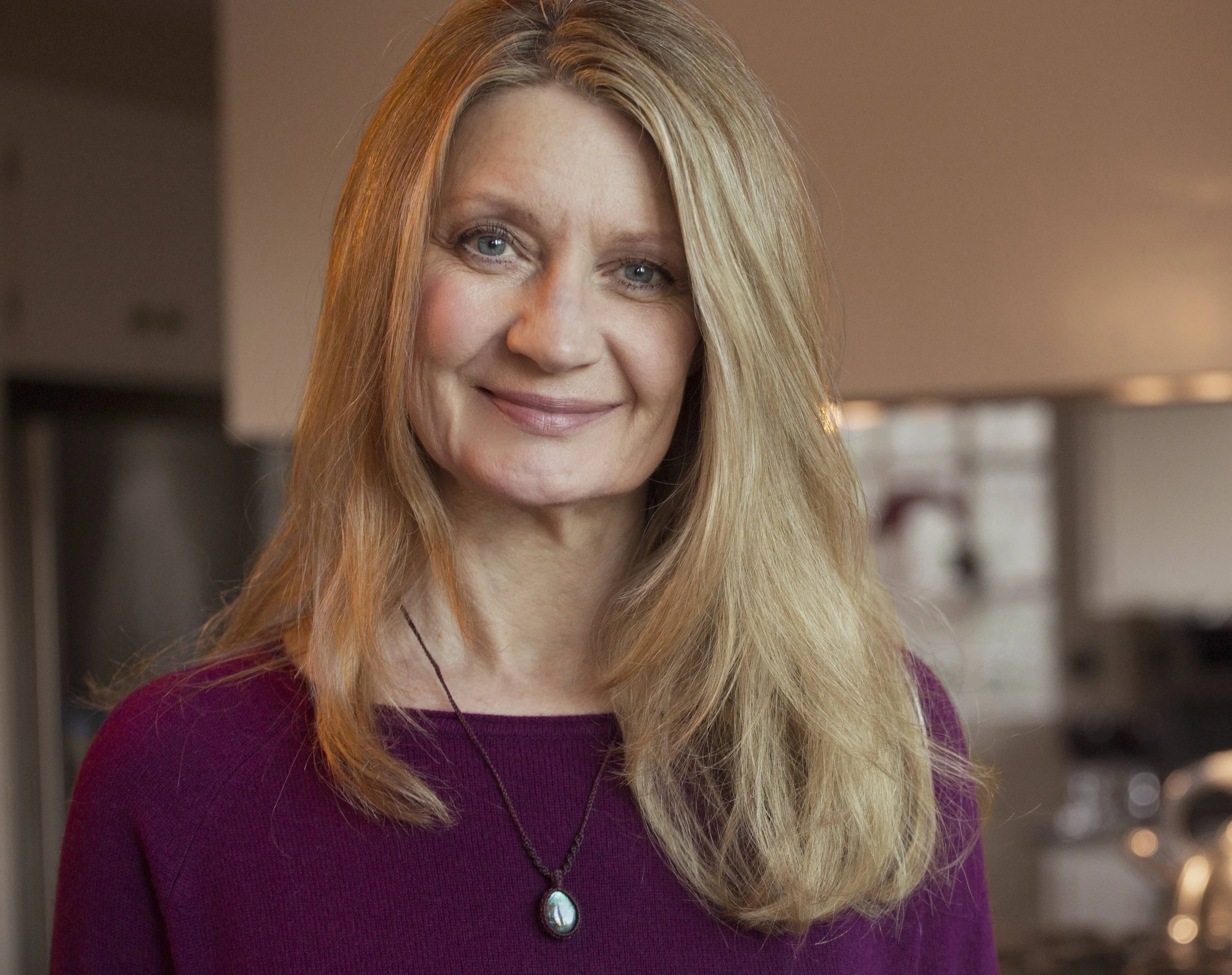
Kristine Jensen
Kristine Jensen has spent her career shaping narratives, crafting voices, and distilling complex ideas into language that connects. Kristine is a lifelong writer whose work has spanned scripts, screenplays, documentaries, and storytelling for brands and organizations. She has written hundreds of marketing scripts across industries ranging from technology to healthcare and education. Her scripts have earned multiple honors, including three Telly Awards and honors from the Columbus Film/Video Festival, the Houston International Film Festival, and the New York Film Festival. Raised on a farm in South Dakota, Kristine drew inspiration for her debut novel, Wednesday Club, from the handwritten minutes of her grandmother’s real-life women’s club, which met faithfully for over sixty years. She now lives in Oregon, where she writes fiction that celebrates women’s inner lives, unlikely friendships, and the quiet power of small towns.
Marina Raydun: Wednesday Club celebrates inter-generational friendship in such a warm, funny way — what inspired you to bring this story to life?
Kristine Jensen: After my grandmother passed away, we found a box of keepsakes from her Wednesday Club: photos, club minutes, and club programs from 1927 to 1995. They captured the story of a group of rural women who met once a month and conducted their meetings according to strict parliamentary procedure. The club was more than just a social club — it was a way to learn about current affairs and find opportunities to help their community. I was especially intrigued by the idea of women's friendships spanning generations. The minutes from the real Wednesday Club sparked the idea for a novel about what might happen if city girl Ivy is dumped on a farm — and how her grandmother's Wednesday Club might help her to find a sense of home.
MR: Ivy is a teen navigating a very small-town life in 1963. How did you approach capturing her voice and perspective?
KJ: Ivy is a city girl, born and raised in Omaha, with no experience with rural life. When her mother dumps her at her grandparents' farm in South Dakota, Ivy is both furious and lost. She doesn't want to be there; feels South Dakota is in the middle of nowhere; and is friendless and lonely. She thinks her mother will come back for her very soon, but as the months stretch on, she realizes she will have to find a way to cope in this strange place. Although my personal life was the opposite of Ivy's (I was a farm girl who moved to San Francisco), I could tap into those old feelings of loneliness, feeling very out of place, and not sure whether I really belonged there or could ever fit in.
MR: The Wednesday Club women each have such distinct personalities. Did any of them come directly from real-life inspirations, like your grandmother’s club?
KJ: I was too young to know many of the women in my grandmother’s Wednesday Club, and all the characters are fictional. Yet I was able to pull some elements of the older women I had known growing up in rural South Dakota. The character of the grandmother is probably closest to my own grandmother, but Ivy's mother is very unlike my mother. Like most authors, I would say that the characters are a blend of many people I have known in my life. And then, as in all good novels, the characters are exaggerated to make them more interesting.
MR: Humor and heart run throughout the book, even when Ivy faces challenges. How do you balance lightness and serious moments in your storytelling?
JK: I specifically created the character of Etola to bring lightness to the group of women. She’s silly, ridiculous, naive, quirky, and extremely lovable — and the perfect foil for her rigid, critical, and cranky sister Bathilda. Together, they create a lot of humor. And because the book has some very serious themes of racism, death, and challenging times, I also wanted to create moments of humor with the other characters. Real life is a mixture of lightness and seriousness, and I hoped to capture this in my novel.

MR: Secrets and surprises drive a lot of the plot. How do you keep the tension alive while still making the story feel cozy and heartfelt?
KJ: The protagonist, Ivy, has been told all her life that her father is dead, and her mother has worked to keep this fantasy alive. Still, Ivy knows she had a father and wonders about him. While she is at her grandparents’; house, she searches for photos or other clues about him. Many of the other characters in the book know more about the truth of the situation, so this also creates an interesting tension in the story. A surprise event begins to unravel the secret.
MR: What was your process for researching or imagining life on a South Dakota farm in the early 60s?
KJ: Of course, it helps that I grew up on a farm, and I go back to South Dakota at least once a year. When I started writing the novel, I tried to really soak in the South Dakota experience, making notes and taking photos. Writing about 1963 and 1964 was more challenging, as I was just a little girl then. I used catalogs and magazines to capture the fashion, cars, furniture, and kitchen appliances. My mom found a stack of farm women’s periodicals (called Kitchen Klatter) from the early ‘60s for me at an antique store. These were a treasure trove of articles, photos, and ideas for what it was like to be a farm wife during that time. And I researched the significant events in the country, including the death of JFK and the beginning of the women’s movement.
MR: Friendship across generations is a big theme here. Why do you think those relationships resonate so strongly with readers?
JK: Those of us who are lucky enough to have friends across generations know how gratifying those connections can be. Older women have so much wisdom to pass along based on their own experiences with relationships, careers, and raising children. And younger women have their enthusiasm, optimism, and (sometimes) children to share! Now that I‘m older, I am so grateful for the opportunity to mentor younger women and continue learning from older women.
MR: Your background spans scripts, screenplays, and brand storytelling. How has that shaped the way you structure a novel?
KJ: I believe my background has significantly influenced how I structured my novel. For many years, I wrote scripts for videos and documentaries as part of my daily job. During that time, I was also writing screenplays as my “fun” writing. These formats are all very driven by the need to combine words and pictures – so I think that, when I wrote the novel, I first created the visual place in my head, then wrote the action and dialogue. I needed to “see” the place I was writing about. I think the marketing and copywriting of my later career years have influenced a tighter writing style and shorter chapters that are more like movie scenes. You won’t find many detailed descriptions or lengthy metaphors in my book. And this style also mirrors the South Dakota voice, where people speak directly and are generally less verbose.
MR: If the Wednesday Club women were real today, what advice do you think they’d have for someone like Ivy (or even for us)?
KJ: I think Wednesday Club members today would urge Ivy to let them help her— she doesn’t have to do it all by herself. I believe that most women want to help one another and lift each other up, if only we let them. We don’t have to go it alone because most women can relate to each other’s challenges and concerns. I believe that, even in our divided nation, we have more in common than we have differences.
MR: Finally, what do you hope readers take away after spending time with Ivy and the Wednesday Club?
KJ: I hope readers find something they can relate to in the story — whether that’s memories of rural life or the relationship they had with their grandmother — even if they weren’t raised in a rural environment. There are some universal themes in the novel, including the importance of women’s friendships, finding meaningful ways to connect with very different people, and the desire we all have to belong and feel loved. And finally, I hope readers remember to value their own “Wednesday Clubs” or to find or create one. We all need a Wednesday Club in our lives.
Learn more about the real Wednesday Club at www.wednesday-club.com.