Author Interview-Lauri Schoenfeld

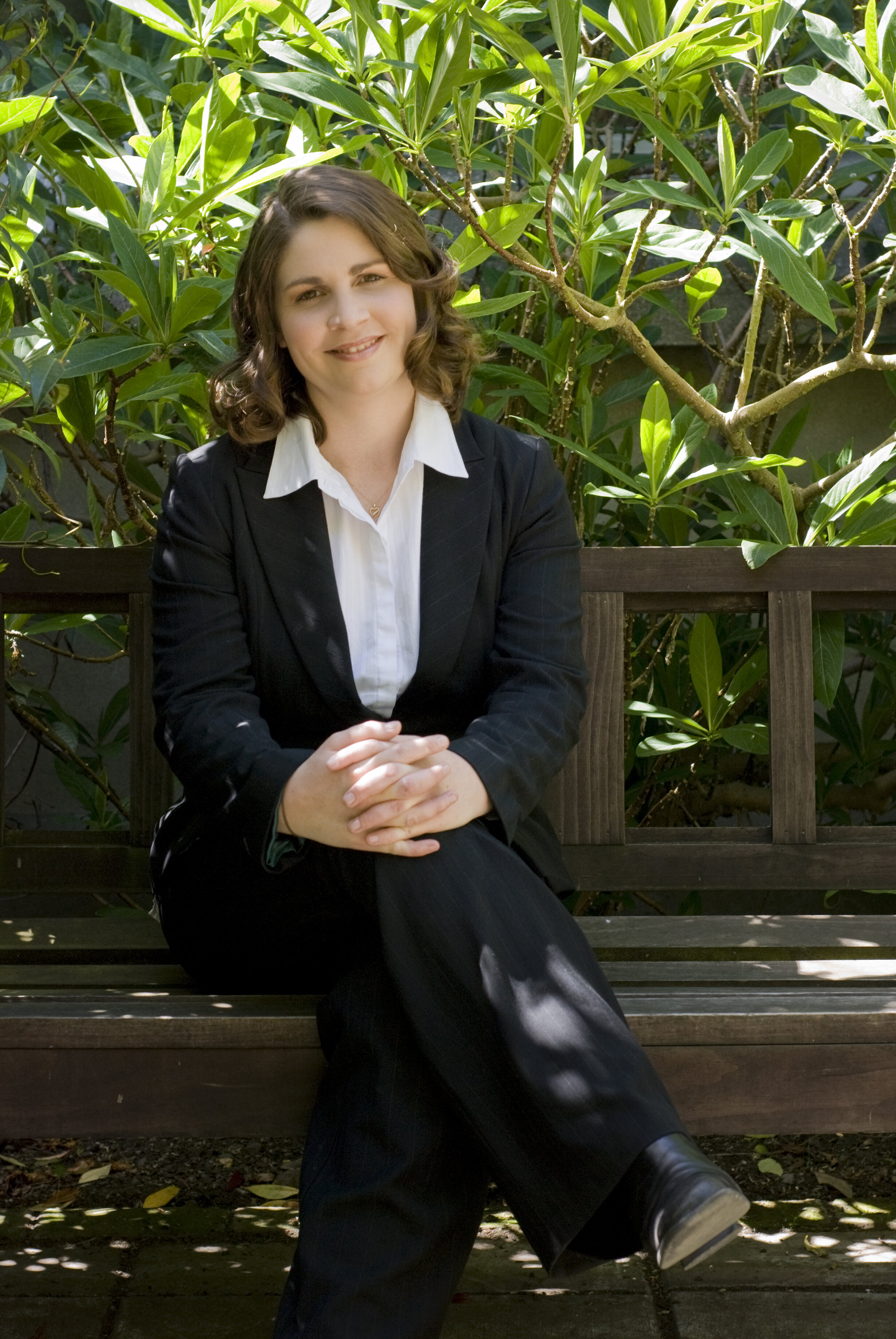
Lauri Schoenfeld

Lauri Schoenfeld

Lauri Schoenfeld currently resides in Utah with her hubby, three kids, and dog Jack Wyatt Wolverine. She’s a child abuse advocate, a Nancy Drew enthusiast, and is part cyborg. Teaching creative writing classes to her community is one of her favorite things to do. When she’s not having long conversations with her characters and creating stories, she’s hosting the Enlightenment Show, reading, or solving a mystery. Lauri’s a well sought-after speaker and a frequent guest with multiple writing groups, podcasts, and businesses, talking about Connecting to Your Artist, Embracing Your Fears to Succeed, and Learning to Love Yourself After Abuse. She’s the owner of Inner Enlightenment, a business built around connecting to your inner light and child within through stillness, creativity, play, and self-expression. Lauri teaches and holds creativity workshops, retreats, and one-on-one coaching.

Marina Raydun: You’re a child abuse advocate and you also head a business that focuses on connecting to your inner child. Why is this so important to you, and how does this weave its way into your writing?

Lauri Scoenfeld: I grew up with childhood abuse within my home, where I felt that play, wonder, expression, and feelings were unacceptable. Because of that, I tried to be something that I wasn’t for a long time, which ultimately turned me into my worst nightmare as unhealed wounds festered without a solution. Writing has been very cathartic and healing for me to write my deepest thoughts on paper where expression, creativity, wonder, and play are always welcome.

MR: Little Owl is a psychological thriller. Do you think you'll continue to write in this genre or are you open to trying your hand at multiple ones?

LS: I would love to write more thrillers, but I’m also open to writing other genres. I have a few YA realistic fiction novels, and a non-fiction book I’m currently in different stages on.

MR: How do you select the names of your characters?

LS: Sometimes, they’re nicknames to people I know, but most often, I can see what the characters look like right from the beginning of creating the story, and I ponder what their name feels to me by what I can see of them.

MR: What was the hardest scene to write when you were working on Little Owl?

LS: There were so many hard parts, but the end was shocking to me with the twist, and after I finished writing it, I cried for a while.

MR: What did you edit out of your book?

LS: I originally had nine POVs for a while within the story. Two characters were chased out of the novel and never came back. I also had many chapters and scenes that didn’t end up moving the story forward, so they also got pulled.

MR: If you could cast your characters in a Hollywood adaption of your novel, who would play your characters?

LS: Oh, I love that question. Adaline Rushner would be Claire Danes. Cache Rushner, her husband is Tom Ellis. Officer Abbott would play Wentworth Miller and Sam would absolutely be Justin Hartley.

MR: Is there a thing you’ve written that makes you cringe now?

LS: I wrote a piece for Little Owl about what a decayed body smelled and looked like. It was cringe-worthy writing it, but reading the edit, it was equally cringy because my writing was uncomfortable and stiff. You could tell I didn’t enjoy writing that scene. There was not much happening, and it read monotone.

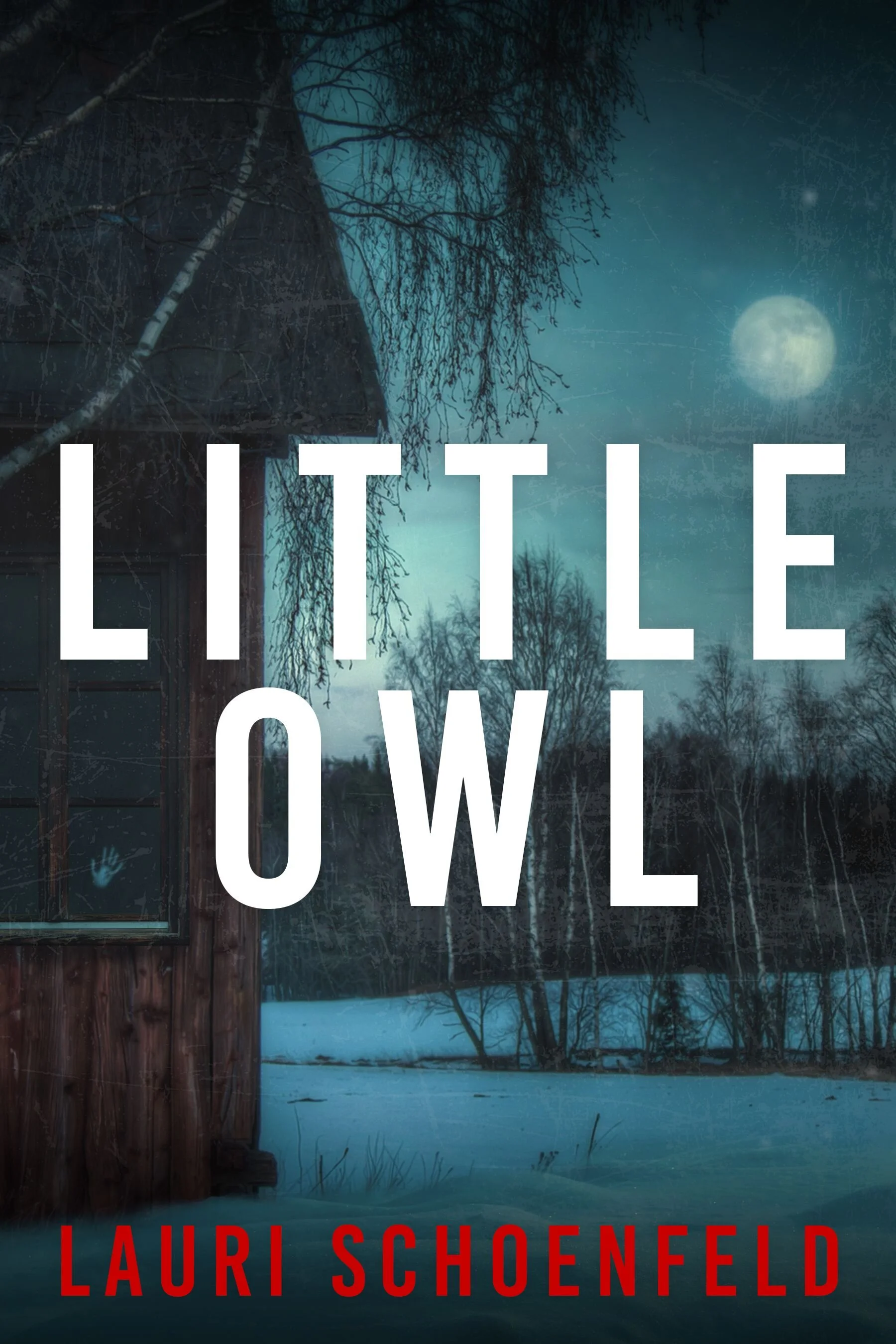
LITTLE OWL COVER.jpeg

MR: If you had to do something differently as a child or a teenager to become a better writer as an adult, what would you do?

LS: I’d stop overthinking and trying to be someone else’s voice. I’d write my own stories, the unfiltered, real, gritty and true pieces, and allow myself to mess up more often.

MR: What is your favorite genre to read?

LS: I love thrillers and mysteries, but also I enjoy memoirs and non-fiction. I’m all about investigating ourselves and finding the hidden secrets that no one knows about.

MR: Is there a book that people might be surprised to learn you love? I love the Alchemist by Paulo Coelho. I’ve read that book multiple times throughout my life and also gather new pieces of wisdom about the beauty of the journey in life.

To learn more about Lauri, please visit:

Website: https://laurischoenfeld.com/

Twitter: https://twitter.com/LauriSchoenfeld

Instagram: https://www.instagram.com/laurischoenfeld/

Facebook: https://www.facebook.com/laurischoenfeldevents

Amazon Author Page: https://www.amazon.com/Lauri-Schoenfeld/e/B096ZFRXB9/ref=dp_byline_cont_ebooks_1

To request review copies or an interview with Lauri Shoenfeld, please contact Mickey Mikkelson at Creative Edge Publicity: Mickey.CreativeEdge@Gmail.com | (403) 464-6925.

Author Interview Series-Shane Wilson

Shane Wilson

Shane Wilson

Shane Wilson is a storyteller. No matter the medium, the emphasis of his work is on the magical act of the story, and how the stories we tell immortalize us and give voice to the abstractions of human experience. His first two contemporary fantasy novels as well as a stage play, set in his World of Muses universe, are currently available. Born in Alabama and raised in Georgia, Shane is a child of the southeastern United States where he feels simultaneously at-home and out-of-place. He graduated from Valdosta State University in south Georgia with a Masters in English. He taught college English in Georgia for four years before moving to North Carolina in 2013. Shane plays guitar and writes songs with his two-man-band, Sequoia Rising. He writes songs as he writes stories--with an emphasis on the magic of human experience. He tends to chase the day with a whiskey (Wild Turkey 101) and a re-run of The Office. Shane’s novels are A Year Since the Rain (Snow Leopard Publishing, 2016) and The Smoke in His Eyes (GenZ Publishing, 2018). Shane’s short story, “The Boy Who Kissed the Rain”; was the 2017 Rilla Askew Short Fiction Prize winner and was nominated for a 2018 Pushcart Prize. An adaptation of that story for the stage was selected for the Independence Theater Reading Series in Fayetteville, NC. Shane is currently at work on a new novel.

Smoke Cover.png

Marina Raydun: You write songs as well as novels. How do the two compare in terms of your creative process?

Shane Wilson: This is something I’ve been thinking a lot about. I’ve always dabbled in different modes and genres. My first publications were in poetry and creative non-fiction, so I’ve always bounced between lyrical writing and prose writing (which can be plenty lyrical, itself). For me, I think the process of writing a song varies in significant ways from writing a story. There are obvious differences (like the whole issue of music composition), but in a holistic way, I think that writing a story tends to happen in a more linear fashion while writing a song tends to play out in a more recursive, circular process. In other words, when I start abook, I tend to mostly write straight through from point A to point B. When I’m working on a song, I might start with the chorus, go to the verses, circle back to the chorus, etc. For me, songwriting tends to jump around a good bit. I think it’s probably because of how songs are put together—with verses and choruses and bridges. Then there is the issue of making sure it all works rhythmically with music and so forth. There is a lot of retreading the same ground when working on a song.

MR: You majored in English and taught English for a number of years. What is the first experience you had when you learned that language had power?

SW: I’m not sure that there is one specific moment in which the power of language was revealed to me. Instead, I think it was the emphasis that my family put on stories. My family was full of storytellers—my father, my mother, my aunt, my grandfather. I was often drawn into the colorful tales they would weave for me—often some combination of the real and the fanciful. It would be years later before I learned how to spin magic from my words like they did, but I think it was growing up listening to those stories that instilled in me that love of language and story.

MR: What does literary success look like to you?

SW: Literary success looks like consistent output and consistent improvement. We would all like to sell a bunch of books every day, but that is less important to me than experiencing the world through writing that strives at a genuine exploration of the human experience. So, as long as I’m still writing and as long as I’m still finding ways to improve my craft, I’m calling that literary success.

MR: Have you read anything that made you feel differently about fiction?

SW: I would point to two books. First, I always tell my creative writing students to read Rainer Marie Rilke’s collection, Letters to a Young Poet. That book changed the way I understood my compulsion to create. Over the course of Rilke’s correspondence with the unnamed young poet, he explores the artist’s compulsion: “A work of art is good if it has grown out of necessity. In this manner of its origin lies its true estimate: there is no other. Therefore, my dear Sir, I could give you no advice but this: to go into yourself and to explore the depths whence your life wells forth; at its source you will find the answer to the question whether you must create.” In other words, art must come out of need. That always meant that if a person could imagine a life without writing, they should abandon the practice. The second book I should mention is Midnight’s Children by Salman Rushdie. No other book has ever spoken to me in the way this book did. In many ways, Rushdie’s work showed me what was possible in fiction. It redrew the boundaries of what fiction could accomplish in a single volume. It masterfully demonstrated how language can redefine what is possible in the world.

MR: What’s your favorite childhood book?

SW: I always loved The Phantom Tollbooth by Norton Juster. I also spent a whole lot of my childhood and adolescence reading R.L. Stine’s Goosebumps. Those books were killer.

MR: What is your favorite genre to read?

SW: I love literary fiction with elements of science fiction and fantasy thrown in.

MR: What are you currently reading?

SW: I am currently reading Light of the Jedi by Charles Soule—the first in a new series of Star Wars novels—and Hollywood Park by Mikel Jollett—a memoir about his family escaping the Synanon cult when he was just a child.

MR: How did publishing your first book change your writing process?

SW: Publishing the first novel made writing a novel feel more possible than it had ever felt before, and in a way, I suppose it was more possible than it ever had been. Once I could see that seeing a project through to the end was possible and that it could find a home, the next story came easier. Writing is like any muscle: the more you write, the easier it gets. Sometimes I might get bogged down in some research for a new project. Other times I may not be sure if the project I’m working on at the moment will go the distance. One thing is for sure, though: if I have a story that can go the distance, I just need to stick with it long enough to finish. Publishing a first novel makes this really basic concept more concrete. Publishing taught me how to finish.

MR: If you could cast your characters in a Hollywood adaption of your book, who would play your characters?

SW: I’ll answer this question in kind of a general way. As for A Year Since the Rain, I think Jesse Eisenberg (Adventureland) would do well as the leading male in either of the novels. I could also see Bill Hader (Barry) or Adam Driver (Marriage Story) in that role. I would like to see someone like Zoe Kravitz cast as Nona. For my second novel, The Smoke in His Eyes, I think of a young, handsome guy for TJ, the music prodigy. He needs to be able to sing, though. Maybe on of those kids from High School Musical: The Musical: The Series—Joshua Bassett maybe, or a Jonas Brother. As for the ladies, Leslie Grace (In the Heights) would be a good choice for Lila, and I would like to see Jenna Dewan (Step Up) in the role of Muna.

MR: Is there a book that cemented you as a writer?

SW: In spite of the fear of being redundant, I think the only book that can cement someone as a writer is the book that person writes. If you’re writing, you’re a writer. It’s the work—not the “success” or the “publication”—that separates the writer from the aspiring writer.

To learn more about Shane, please visit https://www.shanewilsonauthor.com

Author Interview Series-VK Tritschler

VK Tritschler

VK Tritschler

VK Tritschler is a full-time busy body, and part-time imagination conjurer. She lives on the amazing Eyre Peninsula in South Australia, having moved there from her hometown of Christchurch, New Zealand. Her family consists of a very patient husband, two rampant boys and too many pets to mention. She has a wonderful set of amazing writers who support her in the form of Eyre Writers, and in return she offers crowd control services for the Youth section who are the future best-selling Australian authors.

Her first book “The Secret Life of Sarah Meads” was released in 2018 and since then she has kept herself busy participating in the Anthology “Magic & Mischief”, publishing “The Risky Business of Romance”, “Trade Secrets”, participating in the NYC Writing Challenge, the Clunes Booktown, and helping to organize and run the Eyre Writers Festival.

Marina Raydun: Have you been writing since youth or did you fall into it as an adult? What inspired you to start writing within the romance genre?
VK Tritschler: I have always had an interest in the written word but as a reader rather than a writer. I only began my writing life about six years ago when I moved to Australia. But my Nana always loved romance books, and used to hide her 'penny horribles' around the house and I become addicted to not only finding them, but reading them. And from one romance reader to another, there is something almost hypnotic about unravelling the tangle that is a good romance.

MR: What’s the most difficult part about writing characters from the opposite sex?

VK: Perspective. It is all very well to imagine what you think a person might take from a situation, but to truly appreciate their focal points you need to get someone from the opposite sex to read your work and give feedback. Even then, I think we inevitably write with the direction and guidance of our readership as well, which in my case is predominantly women.

MR: What’s the best and worst book review you’ve ever received?

VK: When I started getting reviews, I got a one star review which was almost crippling. As a new writer, it seemed to imply that my efforts were pointless. But then when I stood back and away from the review, I got some perspective and it is now one of my favourite things. It pushed me to write better, be stronger, and ask more of myself and my characters. And there is nothing wrong with not being perfect when you start, its about the journey and growing as you go.

MR: What other authors are you friends with, and how do they help you become a better writer?

VK: I have lots of amazing author friends, who not only push me, but remind me of the importance of my writing on my own wellbeing. When I am tired and run down, I sometimes don't feel like writing, but once I start and escape into the worlds my mind creates it reinvigorates me. Sometimes my friends have to push me to get started, so that I can lavish in the stories. Sometimes it is just being able to bounce ideas around, or discuss plot line or concerns. It is a type of family that wraps itself around you.

MR: What book do you wish you had written?

VK: I read books all the time that I wish I had written. But if I had to meet any authors from any decade it would be Charles Dickens and Jane Austen. One for the darkness and the other for the light.

MR: If you could cast your characters in a Hollywood adaption of your book, who would play your characters?

VK: Actually for most of my books I have scouted ideas of actors, but they are normally obscure or from foreign films. I guess my mind works in mysterious ways!

A Town Called Nowhere book cover.jpg

MR: Is there one topic you would never write about as an author? Why?

VK: I think I would never write about something I didn't believe in. For me, my writing is attached to emotions, and therefore I cannot write a story if I do not emotionally connect to it in some way - which I guess limits me to things that I have experienced or have first hand knowledge of, even its a pseudo-version of my own understanding such as paranormal worlds.

MR: What are your literary pet peeves?

VK: Being told that we cannot create books outside of our genre, or we must write only to market. As authors we are artists, we do not need to be shackled to expectations.

MR: Who is your literary crush?

VK: Nora Roberts - a woman who despite everything, writes what she wants, speaks out when she feels she needs to, and writes prolifically.

MR: Is there a thing you’ve written that makes you cringe now?

VK: No, because when I read my first attempts I can see my own growth and development. Like a toddler learning to walk, and then to run, my writing shows the outline of my literary wings.

You can learn more about VK Tritschler here:

www.vktritschler.com

www.facebook.com/vktritschler

www.twitter.com/vktritschler

www.goodreads.com/vktritschler

To request review copies or an interview with V.K., please contact Mickey Mikkelson at

Creative Edge Publicity: mickey.creativeedge@gmail.com / 403.464.6925.

The first six months of 2021 in books

I’ve been fairly lucky with book recommendations this year (thus far, anyway). And Audible, G-d bless it, has been my one true reading companion, allowing me to ingest much more literature than ever before-12 titles in six months! Here are some brief reviews to help you make some reading choices this summer.

Leave the World Behind by Rumaan Alam

5-stars. What a fabulous literary fiction novel. Highly recommend this one for some uncomfortable self-reflection.

Class Mom by Laurie Gelman

3-stars. A fun easy read. It won’t stay with you but it will entertain you along the way.

Just Like You by Nick Hornby

4-stars. I’m a Nick Hornby fan but this wasn’t a favorite. I didn’t connect with the characters, and I didn’t feel much by way of development either. But what the book did was bring a ton of issues to the surface that I simply never had reason to consider in the past (issues like racism in Europe, Brexit etc). I mostly recommend it for that reason.

The Bad Muslim Discount by Syed M. Mansood

5-stars. Enlightening, entertaining, a ton of character development. Highly recommend, particularly if you like immigrant lit.

How to Walk Away by Kathrine Center

4- stars. Predictable by way of plot but some great character development. Well researched, too!

Send for Me by Lauren Fox

5-stars. So painful yet so beautifully written. Highly recommend, particularly if you have any relation to the plight of the Jewish people during WWII. The author used real life letters from her grandmother as inspiration, and included excerpts throughout. Just wow.

Return to Life by Jim B. Tucker

4-stars. I saw Jim B. Tucker on Netflix’ Surviving Death and was intrigued by his credentials and area of study. This is a fascinating book, backed up by data and science. If you have any interest in past lives, this would be the book to check out.

True Story by Kate Reed Petty

4-stars. Tough subject matter. Will keep you guessing. Great character development.

Good Neighbors by Sarah Langan

5-stars. This is one of my top-3 favorite reads this year to date. Talk about holding up a mirror to “you” (and society as a whole!) and forcing you to look! Cannot recommend this one highly enough! Both the plot and character development are out of this world!

Dominicana by Angie Cruz

5-stars. This book was my book club’s most recent selection. I truly enjoyed it. It never ceases to amaze me just how similar all immigrant experiences and stories truly are. Recommend!

The Wife Upstairs by Rachel Hawkins

4-stars. A little too predictable plot-wise but very entertaining. A good beach read.

One by One by Ruth Ware

4.5-stars. A highly entertaining whodunit, ala Agatha Christie. Though it is set in freezing temperatures, I’d say this is a great beach read as well.

What have you read this year so far?

Author Interview Series-Humphrey Hawksley

Humphrey Hawksley

Humphrey Hawksley

Humphrey Hawksley is an award-winning author and foreign correspondent whose assignments with the BBC have taken him to crises all over the world. His Rake Ozenna series originated when reporting from the US-Russian border during heightened tension. He has been guest lecturer at universities and think tanks such as the RAND Corporation, The Center for Strategic and International Studies and MENSA Cambridge. He moderates the monthly Democracy Forum debates on international issues and is a host on the weekly Goldster Book Club where he discusses books and talks to authors. He has presented numerous BBC documentaries and his latest non-fiction work is Asian Waters: The Struggle Over the Indo-Pacific and the Challenge to American Power.

Marina Raydun: Your CV is truly impressive-a journalist working as international correspondent for BBC since the early 1980s, your professional and life experience is fairly unique. Would you be able to pinpoint an event from your professional life that may have inspired you to start writing fiction?

Humphrey Hawksley: Early teenage reading planted the seeds. I devoured Leon Uris’ fictional history Exodus on the founding of Israel; then Author Hailey’s Airport, Hotel and others; Robert Ruark on Africa and James Mitchener with The Drifters, Hawaii and so on. These books gave me a scope of the world that the classroom barely covered. I couldn’t get enough of these books. Then, years later, in 1995, when I was the BBC Beijing Bureau Chief, I drafted an outline for a non-fiction book about China. My agent, David Grossman, arranged a meeting with the legendary publisher, the late William Armstrong of Macmillan. He glanced through the outline, slid it to one side and leant forward, chin resting on his hands, and said, “This is all very worthy. But could you write me a fictional story of China and America going to war?” I was so happy. That book was Dragon Strike, published in 1997, and, given the current turn of events, it is still selling well today.

MR: What is the first experience you had when you learned that language had power?

HH: What and excellent question! Singing hymns at primary school morning assembly. Onward Christian soldiers. The head teachers saying -- Let us pray and a hall full of children lower their heads and clasp their hands. Then came William Shakespeare and Graham Greene.

MR: Talk to us a little about your Rake Ozenna series. What inspired you to pursue such a storyline? It’s hard to fathom how much research must go into each volume in the series!

HH: Rake Ozenna emerged from a BBC assignment in 2015 when I visited the island of Little Diomede. Far away in Europe, Russia had just taken Crimea and was threatening Ukraine. I wanted to go to the place where the American and Russian territories actually met. Little Diomede is amazing as are the eighty or so people who live there. They wake up every morning looking across a narrow stretch of water at a Russian military island barely two miles away. The islanders are independent, as tough as leather and hard as steel and they live in a wild, remote environment that few people know about. That led to Man on Ice the first in the series. Rake is an islander who is with the Alaska National Guard and a veteran of foreign wars. It would have been easier to create a hero from my own backyard. But I couldn’t resist choosing the unusual setting of Little Diomede and the opportunity to create a no-nonsense hard-as-nails character like Rake Ozenna. As the great Nelson DeMille so kindly said, “We’re glad he’s on our side.”

MR: What does literary success look like to you?

HH: Is it possible? Maybe if you’re like Harper Lee, J. D. Salinger or Jack Kerouac and you do a really great book that stays in the public conversation. But when you’re doing a book every year or so, you’re only as good as your next book. I have met writers whom I regard as hugely successful and often find them concentrating on their failures and anxious to do better.

MR: You also have non-fiction titles to your name. How does your writing process vary depending on whether you’re writing fiction or non-fiction?

HH: Fiction is more difficult. I need uninterrupted ‘me’ time to work out characters, structure, pace and so on. Making stuff up isn’t as easy as it sounds. The non-fiction is more straight forward, and I can work from research and reporting even with people around and interruptions. It is, though, very different to journalism. Structuring 1,000 words is not the same and structuring 100,000.

MR: What’s the best and worst book review you’ve ever received?

HH: I do like the Kirkus one for Man on Fire -- Brass-knuckled international intrigue for readers who still pine for the world of James Bond. I love the one star Amazon for last year’s non-fiction Asian Waters: The Struggle Over the Indo-Pacific and the Challenge to American Power. “Good for tabloid style opinion reading, not an academic work.”

MR: What is your favorite genre to read?

HH: A political thriller and its non-fiction counterpart.

MR: If you could have drinks with any person, living or dead, who would it be? Why?

HH: Adolf Hitler. The bad guy makes the story and he’s the baddest of the bad. Look at all the material still coming out of Nazism and the Second World War.

MR: What do you think about when you’re alone in your car?

HH: Should I get a new GPS. And I structure chapters and plan travel.

MR: Is there a book that people might be surprised to learn you love?

HH: Candide by Voltaire – the horrors and folly the world throws at us; the Panglossian optimism that all is for the best in this best of all possible worlds; and the secret of happiness is to cultivate one’s own garden.

To learn more about Humphrey Hawksley visit the following:

www.manonfire.org.uk

www.rakeozenna.com

www.humphreyhawksley.com

https://www.linkedin.com/me/profile-views/urn:li:wvmp:summary/

https://www.facebook.com/HumphreyHawksleyThrillers

Author Interview Series-Kristine Raymond

Kristine Raymond

Kristine Raymond

It wasn’t until later in life that Kristine Raymond figured out what she wanted to be when she grew up, an epiphany that occurred in 2013 when she sat down and began writing her first novel. Over a dozen books in multiple genres later, there are a multitude of ideas floating around in her head thus assuring she’ll never be idle. When a spare moment does present itself, she fills it by navigating the publishing and promotional side of the business. When not doing that, she spends time with her husband and furbabies (not necessarily in that order) at their home in south-central Kentucky, gardens, reads, or binge-watches Netflix.Kristine is represented by Mickey Mikkelson at Creative Edge Publicity.

Marina Raydun: Your bibliography is rather varied. You are comfortable writing historic western romance novels as well as erotica. Where do you find your inspiration?

Kristine Raymond: It’s more like inspiration finds me.  Ideas pop into my head (usually at the most inopportune times), and stories form that I have no choice but to write.  Anything can trigger the process.  A song lyric, a scene from a TV show or movie, real-life interactions with a bank teller or car mechanic, or observing people as they go about their daily lives (it’s not stalking; it’s research…)

MR: How did publishing your first book change your writing process?

KR: I didn’t have a writing process.  Aside from some angsty teenage poetry and a half-hearted attempt at journaling, I hadn’t authored anything before writing and publishing my first book, Here to Stay, in 2013.  It was all new to me, which, in some ways, was good because I had zero expectations about everything, and in others, it was bad because I had no clue what I was doing.

MR: What do you owe real life people upon whom you base your characters?

KR: None of my characters are based entirely on real-life people.  There may be a personality quirk or habit of someone I know, and I’ve used family names in some of my stories, but my characters are purely fictional.  I will say I think it’s impossible for an author to write and not imprint a portion of their experiences/feelings/beliefs, however minuscule, into their plotlines.

MR: How do you select names of your characters?

KR: Most often, my characters tell me their names without me actively thinking about it, although I did dream the name Landry (my heroine in Hearts on Fire).  If I’m writing a character of a particular nationality, I’ll do an internet search for baby names that are popular to that culture. Worst comes to worst, I’ve been known to thumb through the telephone book for ideas.  Yes, they still make those.

MR: Talk to me about your Seasons of Love series. What a fun, creative idea!

KR: Seasons of Love is one of my favorite books, and not just because I wrote it.  What began as a title for a limited-release anthology – Dogwoods in Springtime – turned into a collection of four seasonally themed, interconnected stories that can be read individually or as a whole.  Based in four different locations that I’ve either visited or lived, the themes in each story vary.  Dogwoods in Springtime is about a widow who gets an unexpected second chance at love.  Seashells in Summer depicts a single mother’s challenge to open her heart to a stranger, knowing she may lose everything in the process.  Aspens in Autumn find our hero and heroine running for their lives – and into each other’s arms, and Snowflakes in Winter is a ‘love at first sight’ tale with a stalkerish twist.  Each story ends in a happily-ever-after, and there is some character carry-over that gives the reader a glimpse into the future.

sol cover version five for ebook.jpg

MR: If you had to do something differently as a child or a teenager to become a better writer as an adult, what would you do?
KR: I’d have told myself to be confident and not worry what others think.  Naysayers are always going to exist.  The key is to listen to what my heart and soul tell me, rather than strangers who have no stake in my life.  So what that some people tell me I won’t succeed?  It’s not up to them.  It’s up to me.

MR: What other authors are you friends with, and how do they help you become a better writer?
KR: At this point in my life, I have more author friends than non-author friends.  Laramie Briscoe deserves the credit for me being where I am today. Hearing her talk about writing and the process of self-publishing gave me the courage to write a book – the first of sixteen, as it turned out.  Grace Augustine, Rebecca Thein, and P.J. Tracy are dear friends, and we chat on an (almost) daily basis.  We bounce ideas off of each other, make suggestions about covers and blurbs and plotlines, and it’s nice to talk with people who understand both the elation and frustration I deal with on a daily basis, as most authors do.  (I could go on and on with names because the writing community is so welcoming and helpful.)

MR: Who is your literary crush?

KR: I don’t have a crush, per se, but Will Lyman from Karen Robards’ Hunter’s Moon is a favorite.  And, Jack Tanner from the Hidden Springs series…well, even though I created him, let’s just say if he were a real-life person, my hubs might have some competition.  Just kidding, honey. 😉
MR: Is there a thing you’ve written that makes you cringe now?

KR: Every book I’ve published.  Seriously, though, there are passages in every book I’ve written that I would reword in hindsight, but when I released them, they were the best they could be.

MR: Is there an illicit book you had to sneak growing up?

KR: Mmmm…I probably read Mom’s bodice rippers a few years earlier than I should have, but I never read anything illicit.  Still haven’t.  Why, do you have any suggestions?

To find out more, please visit Kristine Raymond’s website at www.kristineraymond.com and follow

her on Facebook, Instagram, Twitter, and BookBub.

Hoarding Clothes

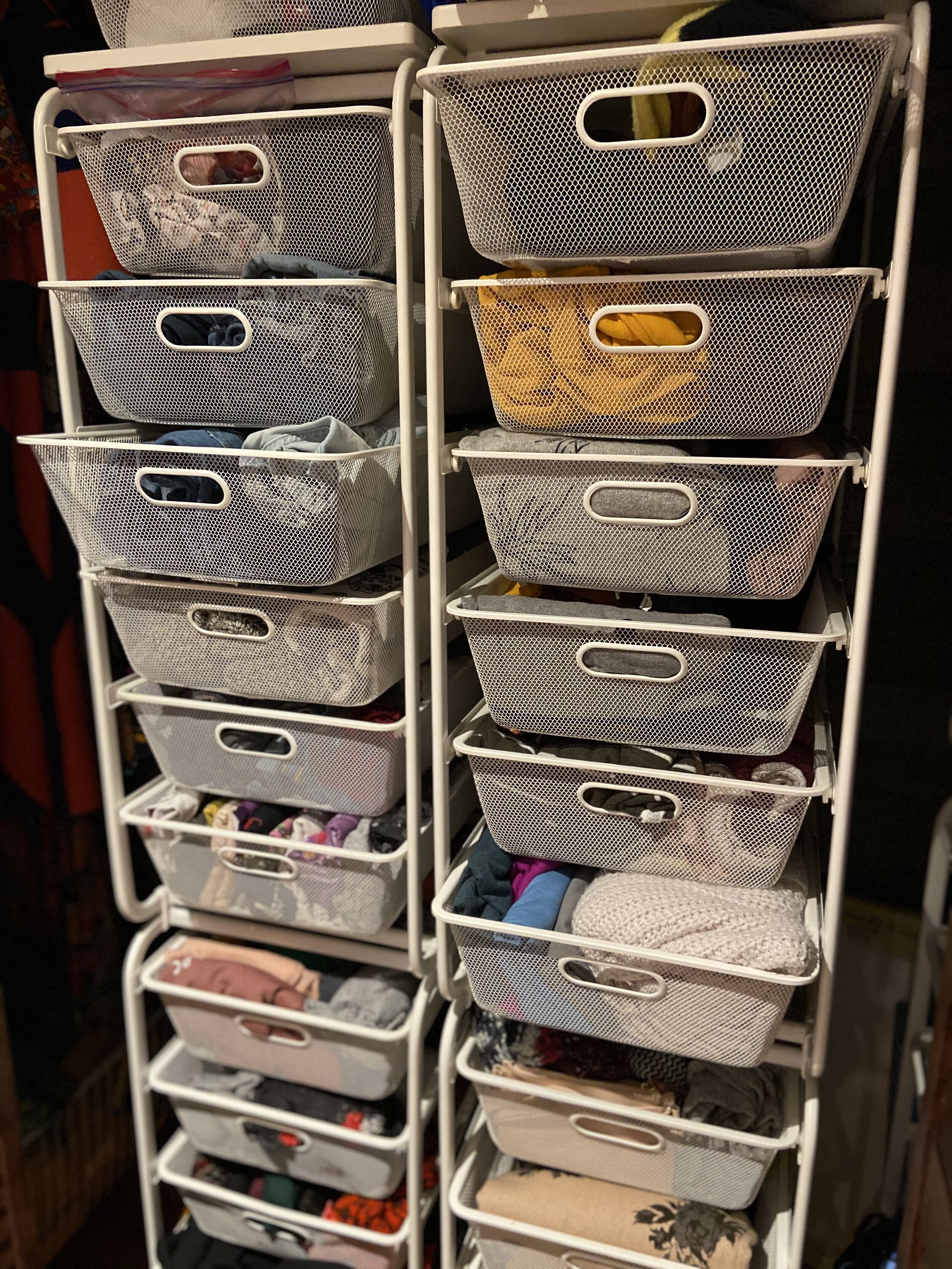
I have too many clothes. I mean, there are multiple closets, shelves, hangers, and drawers. A strange thing to complain about, I know, but between reading all about Death Cleaning and watching Marie Kondo’s multiple shows, I can’t help but wonder why I need all this shit when I wear no more than roughly ten percent of it. Literally, why have hanger upon hanger of dresses, mesh drawer upon mesh drawer full of pants other than the fact that I can now afford to give them all a home? Surely, that’s not a good enough reason, and yet here I am, elbow deep in an attempt to spring clean a week too late-my kid’s school having already completed its clothing drive fundraiser.

The clothes!

The clothes!

So many clothes!

So many clothes!

Growing up, age six through eleven, I wore a school uniform a decidedly deep shade of brown five days a week. Much like most clothes we wore, the uniform wasn’t washed in between wears, earning its turn to be laundered roughly once a month (though a fresh collar was attached to it weekly-we weren’t savages!). On Saturdays in 5th grade, however, we got to wear whatever we wanted. Whatever we wanted was, of course, inevitably limited to whatever we had, which wasn’t much. In my case, it was whatever happened to be inside the shiny Czech closet in our living room. More specifically, it was whichever items of my sister’s wardrobe I could fill out at my ten/eleven years of age, my sister being catastrophically thin and me never being thin enough. To me, her clothes were the epitome of what the future could hold. Having lived with us through college and first job, on her days off, she would frequent the outdoor market where pensioners sold loot from the recently permitted trips to Poland, where they would peddle their own crap and purchase Western clothes (mostly sweaters or denim skirts ornamented with white strips of lace) to peddle back to us. There, she’d treat herself to a blouse or a pair of pants roughly on a weekly basis. Once “free form” was permitted in 1993, I could wear one of the two pairs of my sister’s jeans-one high waisted and acid washed (the same pair I would later travel to America wearing) and a skinny, stretchy black pair (the same one I would later stick a wad of gum into during lunch at my Brooklyn junior high where a lunch aid would scream, “no gum chewing” with alarming regularity and, thus seal the pocket forever). On Sundays, too, when I’d go to a few hours of quasi-Hebrew school at a local dilapidated synagogue I was allowed to wear my sister’s clothes. I was probably one of the coolest kids dressed on any given weekend…but then the weekend would be over and back into the itchy, poop-brown dress I’d go.

The decidedly brown school uniform with a dress white apron (the daily one was black)

The decidedly brown school uniform with a dress white apron (the daily one was black)

I did have my own clothes. There weren’t many (on account of constant growth and having a mandatory school uniform), but my favorites were my American second hand items. My dad, like many in the immediate aftermath of the dissolution of the Soviet Union, had an entrepreneurship gig on the side of his nine to five job. Namely, he had a small, hole in the wall shop that sold liquors, lycra pentyhouse (heresy, I tell you!!), and chocolate-all European! Unironically, the shop’s name was as tacky as it was unoriginal (Marseilles!), no one involved in the venture having ever been anywhere past the confines of the USSR, let alone France. The name certainly wasn’t the idea of the city’s Association of People with Disabilities, from whom dad’s little venture was leasing the space. It is through a host of charities that this organization received a rather impressive shipment of American donations one year. A clothing drive, probably not unlike the one I just under-delivered to at my kid’s school, must’ve been held somewhere in the United States, and these Bobruisk folks with various disabilities were the intended beneficiaries. Only the country was starving so only the president and the immediate assistants benefited free of charge; the rest of the folk had to pay. And, though none of us qualified on basis of any disability, because my dad’s business was an important source of income for the Association, our families too got to partake-first dibs among the paying clientele, no less. Winning! Those were some good dibs, too! Ah, that mustard colored plush skirt with a zipper down the front and a pair of Timberland boots made me feel so American. Our impending immigration on my mind, I imagined that all my clothes would look like that once we moved. Actually, the dream was that on the other side of the ocean, I’d eventually have enough clothes to change outfits everyday, just like I watched them do in the Latin American telenovelas they’d started showing us on TV daily. Apparently, rumor had it, it was a hygiene consideration, let alone a statement of your socio-economic status, this whole changing clothes everyday thing. To have an outfit for every day of the week-ah to dream! On TV, the outfits also never repeated (ever!). I figured that was probably a bunch of baloney but I liked it, in principle.

When I finally did come to America, I had very little of my already tiny wardrobe traveling west with me. I had very few prized possessions but my sister informed me that my favorite pink shiny leggings and green bicycle shorts were a no-go because, allegedly, only hookers wore those in America. So, instead, I’d brought the same items I’d by then officially inherited from my sister. In addition, some other things made it into our misshapen suitcases, like all the random summer ensembles bought at the same outdoor market where my sister liked to shop. Besides these things, I had nothing. My grandma (who’d made the move three years ahead of us) claimed that she had everything prepared for me, therefore there was no need to bring clothes for me. We were to save the luggage space for pots and pans and sewing kits. Unfortunately, a few days into my American tenure, I discovered that what grandma meant was that she had a couple of black garbage bags of clothes collected from various neighbors’ daughters waiting for me in her studio apartment hallway closet. None of them fit or were remotely age-appropriate. So much for my American wardrobe getting off to a good start. Back to the drawing board whilst wearing my faux leather sandals with socks.

My cousins removed once, twice or thrice rushed to the rescue (the western way of enumerating relations still confusing to me despite that one Trusts & Estates class in law school). They were older and taller but it worked. More than that-it saved me. It did bother me that these weren’t my items, and that they had a vague smell of someone else’s detergent no matter how many times we washed it in our building’s basement laundry room using our own 99c one, but I had enough clothes to change an outfit every day of the week once school started, as the reported cultural expectation dictated. In fact, I had exactly five changes-just enough for a school week (if I ever showed up all five days in one week that first year in America, that is). I was otherwise miserable, of course, swallowed whole on the daily basis by an overcrowded school buzzing in a language I did not understand but, at least, I was dressed fairly well while crying in this classroom or that. 

The black jeans I inherited from my sister (this is after their pocket has been sealed shut with gum).

The black jeans I inherited from my sister (this is after their pocket has been sealed shut with gum).

One of my most prized possessions—this Polish sweater I’d inherited from my sister.

One of my most prized possessions—this Polish sweater I’d inherited from my sister.

Still, family donations weren't enough for the first fancy party my family was invited to in the spring of our first year here. The whole entire restaurant was being closed down for this shindig and none of my clothes were appropriate-neither my jeans with the no longer functional pocket nor my $10 plaid skirt. Shopping for this ball wasn’t in the cards simply because our budget didn’t allow for a one-event fancy dress for me. Fortunately, given that I’d stopped routinely weeping at school sometime around March and this was May, by then I’d gotten a few people in my circle who were okay with my calling them friends. One of these girls had a lean, slender body and a cousin with what seemed like way more money to all of us back then than it would now. This cousin had bought Jane a dress for some bar-mitzvah and generously, with her parents’ permission, she allowed me to borrow it for the party. It was velvet and featured a bead and/or pearl pattern. It had poofy sleeves and some sort of a ruffly bottom and it was glorious. Zipping me into it was no small feat, and I was a little too proud for not busting its zipper (because no way would my family be able to afford fixing it), but I will be forever grateful to a blonde girl named Jane whom I likely would not recognize walking down the street today. One day, I swore back then, I wouldn’t need hand-me-downs and friends’ rentals.

My rented gown. We’d bought the shoes at the $10 store.

My rented gown. We’d bought the shoes at the $10 store.

It is no surprise, then, that when I got my first job paying above minimum wage, I shopped (stil cheaply, of course) and shopped some more. Affordable clothing and even a tiny bit of fairly disposable income (I was living with my parents and my sole expense was a metro card and lunch by then) meant I could afford some decent variety. It turns out that’s what I’d been after all along-to have more than five outfits, to repeat less often, to be like the ladies of the New World television. In high school, I had three pairs of jeans (all Levi’s!) and probably ten tops (thanks, Saks 5th Ave OFF 5th). In college, it was five pairs of jeans and roughly fifteen tops. By law school, it was seven and twenty. Now, it’s fifteen and figurative infinity. It’s all the little Soviet child inside me ever wanted but the kicker is that I still wear no more than ten percent of it all so what’s the functional difference? I only like looking at it all, folded and hung neatly, as if the sum of all the contents of these multiple shelves and hangers are a positive summary of my life thus far. It’s all sorts of telling and horribly depressing. Now I feel cluttered and simultaneously ungrateful for my riches. It doesn’t take a graduate degree in psychology to understand the metaphorical dependency here-I shop because I can, because I want to make up for all the years I couldn’t. Still, it’s starting to feel gluttonous. Surely, it’s the opposite of the intended and expected effect of all this accumulation. No one needs forty t-shirts and fifteen pairs of shorts living in the Northeast. No one needs five pairs of dress pants and twelve blouses when she doesn’t have an office job or go out. Maybe someone else can benefit from my greed. Maybe some girl out there will find the joy in my second-hand clothes and the cycle will begin again. 

Now, what to do with the hangers?!

Now, what to do with the hangers?!

Author Interview Series-Chris Humphreys

Chris Humphreys

Chris Humphreys

Chris (C.C.) Humphreys has played Hamlet in Calgary, a gladiator in Tunisia, and a dead immortal in Highlander; he’s waltzed in London’s West End, conned the landlord of the Rovers Return in Coronation Street, commanded a starfleet in Andromeda, and voiced Salem the cat in the original Sabrina. He has published 20 novels including The French Executioner, The Jack Absolute Trilogy; Vlad – The Last Confession; A Place Called Armageddon; and Shakespeare’s Rebel. His novel Plague won the Arthur Ellis Award for Best Crime Novel in Canada in 2015. He is now also writingepic fantasy with the Immortals’ Blood Trilogy, for Gollancz; the first book, Smoke in the Glass, was published in 2019 and Book Two: The Coming of the Dark in 2020. The epic conclusion, The Wars of Gods and Men, will be published in 2021.

He has an MFA in Creative Writing from the University of British Columbia. He wears a unicorn signet ring and always wondered why. The Hunt of the Unicorn begins to answer that question.

Marina Raydun: What a phenomenal CV! When did you first start writing plays?

Chris Humphreys: I wrote my first play in 1992. I entered a 24 Hour playwriting competition in Vancouver where I was living at the time. You went into a room with 2 pages of notes at 5:30 on a Friday night, left 24 hours later, having slept there… my sole goal was to finish something, a draft- always my problem. I ended up winning! The prize was $500 and a production the following year. Suddenly, I was a professional.

MR: Are there any major differences to your creative method, your artistic process, when you’re playwriting versus penning novels?
CH: A little. I don’t tend to plan much when writing a novel, but I do some. With a play it’s even more open— who are these characters? What do they want? How do they tell me that?

MR: What is the first experience you had when you learned that language had power?

CH: I’ve always known that from my life as an actor. When you connect with someone in an audience – laughter, tears – you realize how language affects people.

MR: Have you read anything that made you feel differently about fiction?

CH: Almost anything by Rosemary Sutcliff. The way she conjures ancient worlds with only that world’s references – plants, religions etc. Always blows me away.

MR: Is there one topic you would never write about as an author? Why?

CH: Never? No. But I do find violence, especially sexual violence, against women very hard to write about. Sadly, there was so much of it down the centuries so to avoid it entirely is to whitewash history and its consequences. I have to strike a balance.

MR: Has anything changed for you, creatively, over the course of the pandemic?

CH: Not really. I am a writer so I am always kind of in lockdown. I haven’t been able to travel to research but my new novel is set mainly in London, where I lived for years, and Norway where I have spent a lot of time. Just hope it doesn’t go on too much longer.

One-London-Day-Kindle.jpg

MR: What is your favorite genre to read?

CH: I read across the genres. It depends on my mood. I like a good thriller or speculative fiction with a twist. Sometimes I read what I am writing, more often not.

MR: What literary pilgrimages have you gone on?

CH: They are mostly to do with research. I try to go to the places I am writing about. To be on the walls of Constantinople and see your characters in action or to stand in a room in Targoviste (Romania) where Vlad launched his Easter Sunday massacre… that is inspirational. I acknowledge the legacy of other writers, but I tend to honour them through their words, not the places they dwelt.

MR: You also narrate audiobooks. Tell us a little bit about that process, especially when it comes to narrating other authors’ creations.
CH: This has been my great ‘pivot’ of the last year. I always recorded my own audiobooks for publishers when they bought the rights. But last year I set up a studio, learned the tech (not usually my strongest skill-set) and hung out my shingle. I love all forms of storytelling and bringing someone’s visions to life in the spoken word is a privilege.

MR: Is there a book that people might be surprised to learn you love?
CH: Anything by Raymond Chandler. I love his prose. “No matter how much I try to be nice, I always find myself kneeling with my face in the dirt and my thumb reaching for some guy’s eye.” There’s everything in that sentence, about character, action and sheer brio. If I could write one like it, I might put away my pen forever. Job done.

More information about Chris can be found on his website at authorchrishumphreys.com 


Author Interview Series-Lawna Mackie

Lawna Mackie

Lawna Mackie

Lawna Mackie is a small-town girl with big world dreams. She was born in Jasper, Alberta, and her parents were outdoor enthusiasts. Her dad was an avid fisherman and she is certain her mother was Mother Nature.

The love of her life is her husband. He, along with her animals are the inspiration for everything she writes.

She lives for romance, and truly believes love conquers all. From an early age you could always find her with her nose buried in a romance novel—that hasn’t changed. She writes various forms of romance from contemporary, paranormal and fantasy to erotica.

Marina Raydun: Your genre of choice is romance through and through. When did you first discover it for yourself?

Lawna Mackie: When I was in high school I read Wuthering Heights, by Emily Bronte and I was in love with the doomed love story between Heathcliff and Catherine. Then a good friend of mine, who always had her nose buried in Harlequin romances offered me one to read. I was hooked and from that point on I knew romance novels would always be the books for me.

MR: What is the first experience you had when you learned that language had power?

LM: When I started writing my first novel, I didn’t really realize it would be a novel or exactly what it would be. What I did know was that I loved writing and I love fantasy. When I finished the story, I remembered thinking “Now what?” Eventually I let somebody read it and they loved it. I wondered if they were serious or just being kind. Others told me it was good, so I got up enough nerve to submit it to some publishers and to my surprise I found one. Once that happened, I believed I should share my stories with more people, so I kept on writing.

MR: What do you owe real life people upon whom you base your characters?

LM: First and foremost, I owe my husband everything. He is my best friend, my inspiration and my number one fan. I can’t say he reads romance, but he is my hero in all worlds. I also love animals more than I can say in words, so I write about them. You will never find a story from me without a fantasy critter or animal of some sort.

MR: What’s the most difficult part about writing characters from the opposite sex?

LM: I like the saying, “Men are from Mars and women are from Venus,” because it’s true. Men and women can be so absolutely different. This is true for my husband and I. Sometimes I think we are salt and pepper. I find myself asking “Is this really how my male character would view this situation?” It can be difficult.

MR: How do you select names of your characters?

LM: If I am writing a fantasy, there is a little more freedom with the names. I can be a little more inventive. For my contemporary novels I generally pick names that I like. I do web searches for names that are catchy to me. I often ask my readers what names they like.

MR: Some of your novels are rather “naughty.” Is there an illicit book you had to sneak growing up?

LM: That’s too funny! I can’t remember which book may have seemed exceptionally “naughty” to me, but once I discovered paranormal romances, I expanded my reading list and discovered “Wow, there are some naughty books out here.” I loved it! I like pushing the boundaries between steamy romance to HOT.

MR: What’s the best and worst book review you’ve ever received?

LM: The worst review I received was when I started self-publishing early on in my career before self-publishing was widely accepted. I discovered that one of my books had mistakes—spelling and grammar. A reader called me out on that rightfully so. I was devastated, because even though I had read it over and over many times, and others read it as well, it still had mistakes. I pulled that down very quickly, and it was then that I knew I would never publish another book without hiring a professional editor. I now have an editor that I have been working with for many years and I couldn’t do what I do without her.

I have received many great reviews but the ones that make my heart sing are the ones where readers can’t put the book down, they laugh, they cry and fall in love like I do every time I read a story.

MR: What is the most difficult part about your artistic process?

LM: I get a lot of my ideas from my dreams and when I don’t dream it messes me up a bit. Cookies and milk at bedtime help. I also like camping and a lot of ideas come from being outdoors. I can’t say I really like winter…except for Christmas and snow, so I have to wait for summer.

MR: If you could cast your characters in a Hollywood adaption of your book, who would play your characters?

LM: Right now, I have picked Sarah Rafferty from Suits as my heroine and my hero is Peter Badenhop. I believe he’s a model. I found him on Pinterest. They are both such beautiful looking people. I imagine they are beautiful on the inside as well.

MR: Is there one topic you would never write about as an author? Why?

LM: I don’t like politics. I could never see myself writing about that.

To learn more about Lawna, please visit her website at https://lawnamackie.com

To request additional review copies or an interview with Lawna Mackie, please contact Mickey Mikkelson at Creative Edge Publicity: mickey.creativeedge@gmail.com / 403.464.6925.  

Author Interview Series-Mark Leslie

Mark Leslie

Mark Leslie

Mark Leslie Lefebvre has been writing since he was thirteen years old and discovered his mother’s Underwood typewriter collecting dust in a closet. He started submitting his work for publication at the age of fifteen and had his first story published in 1992, the same year he graduated from university. Under the name Mark Leslie, he has published more than a dozen full length books. He pens a series of non-fiction paranormal explorations for Dundurn, Canada’s largest independent publisher. He also writes fiction (typically thrillers and horror) and edits fiction anthologies, most recently as a regular editor for the WMG Publishing Fiction River anthology series. The very same year, Mark saw his first short story in print he started working in the book industry as a part-time bookseller, and was bitten by the book-selling bug. He has worked in virtually every type of bookstore (independent, chain, large-format, online, academic and digital). He has thrived on innovation, particularly related to digital publishing, and enjoys interacting with the various people who make the book industry so dynamic. Between 2011 and 2017, Mark worked at the Director of Self-Publishing and Author Relations for Kobo where he was the driving force behind the creation of Kobo Writing Life, a free and easy to use author/small-publisher friendly platform designed to publish directly to Kobo’s global catalog in 190 countries. By the end of 2016, Kobo Writing Life established itself as the #1 single source of weekly global unit sales for Kobo and, in primarily English language territories, responsible for 1 in every 4 eBooks sold. Mark has spoken professionally in the United States and Canada, in the UK and across Europe, specializing in advances in digital publishing and the vast and incredible opportunities that exist for writers and publishers. Stark Publishing is an imprint Mark created in 2004 when he released his first book One Hand Screaming. He has used the imprint to publish more than 25 books. Campus Chills (2009) and Obsessions (2020) are two of the titles he used to anthologize other authors writing. Rude Awakenings from Sleeping Rough is the first single author title from a different author that he has published.

Marina Raydun: I feel like we need to start at craft beer. Do you brew your own or primarily sample and review others? Anything that pairs particularly well with writing?

Mark Leslie Lefebvre: I’ve only tried making my own beer twice. Once with my father when I was in my early twenties. It was not good. Well, the beer wasn’t good. The experience of making it with my Dad was the really fun part. And once a few years ago with my partner (and fellow beer conspirator) Liz. It was good, (the beer, and the experience doing it together), but it was a significant amount of work for just a single growler of beer. It seemed hardly worth it.

I’ll be honest, I just don’t have the patience to do it well. I’d MUCH rather drink and enjoy the fine work of the masters who are good at the process. In the time it would take me to make a single growler of IPA I could easily have enjoyed a few dozen growlers of someone else’s amazing craft brew.

MR: Anything that pairs particularly well with writing?

MLL: I actually don’t regularly drink beer when I write. Beer goes down TOO quickly. So if I’m writing in the evening, I usually pair it with a nice single malt scotch. That I can drink slowly.

MR: Besides fiction, you also write about nonfiction paranormal explorations. Can you talk to us a little bit about that? 

MLL: When I started writing, it was to explore the unknown and the “what if’s” – the majority of my fiction might be classified as “Twilight Zone” in nature because I always liked to explore the dark corners, the unexplainable things. So, later on, when I saw the opportunity to turn some of the research I was doing into non-fiction explorations of the same thing, this time with a bit more “serious” approach (meaning, instead of making up the ghosts and the things that went bump in the night, I listened to first-hand accounts, read books and articles about them, and reported what I’d learned.

MR: Any fun findings?

MLL: Plenty of fascinating things. But I think the most intriguing thing I discovered in that process was learning just how much I could love history. I hated that class in high school. But it wasn’t until going on my very first ghost walk tour that I realized that history could be alive and dynamic and compelling. So it was my thirst for ghost stories that led to a much richer desire to learn and understand history. That was something fun to discover about myself.

MR: Your fiction work is primary in the horror and thriller genre. What attracts you to these subjects?

MLL: I’m not sure if “attracted” is the operative term so much as “has no choice but to be compelled by.” I’m always been compelled by the unknown, and my curiosity of what might be hiding in the darkness just out of site. As a 51 year old man, I’m still a little bit nervous about the monster under my bed, and worry about that hand reaching out to grab my ankles there, or between the joists of the basement stairs.

It has always been that way. It might always be that way for me. And thus, when I sit down to compose a story, those shadows tend to creep in. It’s just natural.

For the longest time, my Mom, who does not like reading anything I write, but loved reading, especially romance novels, “Mark, why can’t you write a nice story?”

All that being said, one of the redeeming qualities about writing about horror and thrillers and dark things is that, when the word itself is dark, I can create monsters and bogeymen where good triumphs over evil. Because at least there, I’m in control. Things can still make sense. Good and righteousness can prevail. Unlike reality. And, if the tension is too tight, at least the reader can close the pages of the book and feel safe again.

MR: How did publishing your first book change your writing process?

MLL: My very first book, One Hand Screaming was published in 2004. It was a collection of short stories. And it was self-published. I felt justified, even back in those “dark ages” of self-publishing, because the majority of the stories in that collection had been through a slush pile, selected by, and edited by an editor of some magazine.

And I created the book because I had a track record of selling short stories, but not a single book to my name.

I didn’t change my writing process so much as I changed my approach to the business aspect of writing and publishing. I stopped waiting for permission, and I was determined to do some bold experimentations in publishing. The first anthology I edited for a publisher was me partially going rogue and taking over an existing anthology when the original editor went MIA. The second anthology I edited I did using my self-publishing imprint and with an investment from three university bookstores to help ensure I could secure pro rates for my authors.

I basically applied the same creativity to the business of publishing as I applied to the writing itself.

MR: What is your favorite genre to read?

MLL:  Oh, that’s a really tough one, because I genre hop all the time. I love reading different genres, I love exploring authors and subjects, and areas I haven’t read before.

But if you forced me to land on a single term, I’d like have to use the word Speculative Fiction. I like fiction that explores concepts of “what if” and in unique ways. So it’s a genre that I will always return to.

MR: Are there any books you’ve read over and over again?

MLL: I think I have read the novel Earth Abides by George R. Stewart more than any other novel. And in terms of non-fiction, the book On Writing by Stephen King is likely the one I’ve read the most.

Interesting aside. Earth Abides is about a virus that wipes out the majority of humans, and my partner Liz and I decided to read the novel together at the very beginning of the pandemic in the late winter/early spring of 2020. In fact, the book appears in the first two music parody videos (pandemic themed) that we released in the spring of 2020. It was a cheeky nod to the situation. But also a nod to one of my favorite novels of all time. Which, by the way, with the exception of some sentimentalities from the 50s related to sexism and racism, holds up quite well.

MR:  Is there a book that people might be surprised to learn you love?

MLL: Ohh, that’s a good one. I suppose the fact that there are some pretty tropey romance novels that I just loved, maybe folks might find it interesting to learn that I’m a gigantic fan of Hamlet. Yes, I know it’s a play, but it’s one I’ve read multiple times, and always love watching performances of. I’m also a bit fan of Henry David Thoreau’s writing, in particular the essay Walking.

MR: Is there one topic you would never write about as an author? Why?

MLL: Another great question. Well, considering that I’ve written about two of my personal deepest darkest fears, the death of my father, and the death of my child; the fact that I’ve written about people doing some pretty nasty and terrible things to one another, I’m not sure that there is a topic that I would never write about. 

Writing can be therapy in many ways; but it can also be a way to explore and try to understand fundamental elements of the human condition, to try to figure out why people behave in certain ways, or do certain things. And so, by being open to exploring even the most disturbing or confusing and misunderstood elements of humanity, I’m allowing myself to continue to learn and grow as both a writer and as a person.


MR: What do you owe real life people upon whom you base your characters?

MLL: I owe them the dignity to be explored, understood, and expressed with compassion and respect. Even if there might not be respect for some of their characteristics or actions they have taken, there is respect for allowing that character to be true and real.

To me, this means that a character can’t or shouldn’t be a stereotype or a convenient plot device. They need to be living and breathing and motivated by things that are critically important to them, even in their fictional makeup. And I owe that to all of my characters, even the ones that aren’t based upon real people.

MR: You are active on the indie-publishing scene and are incredibly supportive of fellow writers. Can you talk a little bit about your time with Kobo Writing Life?

MLL: I feel so lucky that I was in the right place at the right time when Kobo was looking to create a solution to make it easier for self-publishing authors to get books into their catalog. When I sat down with Michael Tamblyn to discuss the ideas, I knew that I was the perfect person for the job. My own experience as a writer and a bookseller, not to mention my years of experience creating a solution for smaller publishers to provide data to Canada’s largest retail book chain, provided me with exactly the right background to attack the role with in depth understanding, authenticity, and a balanced approach.

I love the fact that Kobo hired me, put me at a desk with a phone and a laptop and said: “Okay, figure out what we’re going to do.” I had carte blanche to come up with a solution. I spent a lot of time talking with various folks within Kobo as well as authors and industry people in order to come up with Kobo Writing Life. I got to brainstorm my ideas with some brilliant developers and then, later, hire a team to help me in supporting the platform and the authors.

I am tremendously proud of what we built when we created Kobo Writing Life and love that it set a standard that multiple other platforms have copied in multiple ways. It is a legacy that I am quite fond of, and always will be. Maybe that’s because I built a platform that I wanted to use as an author myself. So, while I had to wear a corporate hate, I was also able to wear my author hat at the same time and make sure that the systems created were balanced and effective for both parties.

To me, it’s like writing a great story where you are always keeping the reader in mind. When you do that effectively, the product, the tale you have generated, works its magic at connecting the author and the reader in a magical and virtual dance.

To learn more about Mark, please visit the following:

Facebook: https://www.facebook.com/MarkLeslieAuthor/

Twitter: http://www.twitter.com/MarkLeslie

Instagram: https://www.instagram.com/markleslielefebvre/

Youtube: http://youtube.com/markleslielefebvre

Website: ABOUT – Mark Leslie