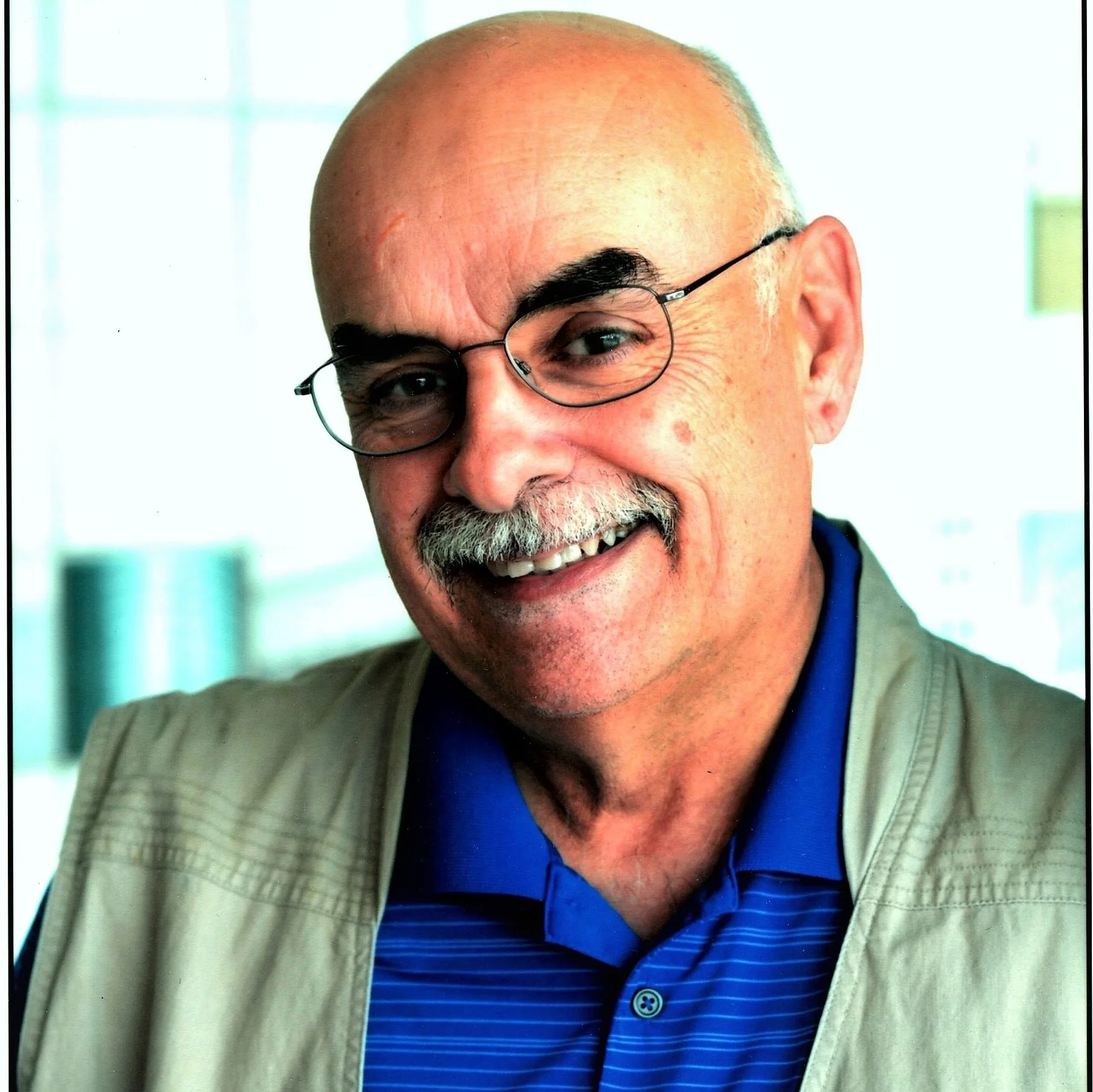
Author Interview Series-Marc Watson

marcwatson.png

Marc Watson is a Calgary author of fiction. He is the author of the Catching Hell epic science fantasy duology, as well as the urban fantasy comedy Death Dresses Poorly. He is a loving father of two active boys, as well as husband to a very supportive wife. When not writing he can be found working at his full time job, participating in all sports imaginable (except soccer…), hiking and camping, or playing any one of his twenty two video game systems.

Marina Raydun: Death Dresses Poorly is such an intriguing title. I have the hardest time compositing titles for my own books. How easy are titles for you?

Marc Watson:  Thank you! I was particularly proud of that one, and it always seems to get the most positive feedback. As for ease, I’m very lucky in that naming things, be it characters, places, magic systems, or even the books themselves, is very easy. I may find a common theme, but for the most part I just pull them out of thin air.

MR: What is it about the genre of Fantasy that makes you want to write?

MW: It’s likely the lack of rules. In fantasy you can let your imagination run wild, and the parameters are only limited to your skills as a writer. I can destroy the planet, or rebuild millions of new ones. I really am a creator and destroyer of worlds, depending on the day.

 MR: As a reader, do you gravitate to this genre as well?

 MW: For the most part, yes. It is certainly what I read the most of. However, my favorite book of all time is The Shipping News by E. Annie Proulx, which is a modern story about broken lives in rural Newfoundland, so I’m certainly not married to the fantasy or science fiction worlds in the slightest.

MR: What is your favorite underappreciated Fantasy novel?

MW: Great question! I really think Eyes of the Dragon by Stephen King doesn’t get the praise it deserves. It was buried in his prolific 80s phase, and pales in scope and scale to his grandiose Dark Tower series. He wrote it just to have something in his works that his kids could read when they were young, and it comes across so smooth. It’s simple and well detailed, but not overly so like so much of his other work. A little magic. A little adventure. Very well structured.

Catching Hell Part 1 Cover.jpg

MR: How strict is your writing process? Do you have a daily fenced-off writing time? How detailed are your outlines?

MW: Not at all. In fact it’s the complete opposite. To go one step further, I doubt you’ll ever meet anyone as opposed to those kinds of things as I am. I’m a major believer in letting stories form as and when they happen. I’ve never had success making a strict writing time for myself, and I find in conversations with other authors that they only do it because another author guided them that way.

Now I’m not saying it doesn’t work for some people, but I know for a fact it doesn’t work for me, and I can’t possibly be alone in that. I just think people need to find their own writing rhythm, and that may not involve set writing times, word goals, or the worst of all, things like NaNoWriMo (*shudder*) 

This applies to outlines as well. I have a start. I know the ending. Then I let my fingers guide the way and we see where we go. Maybe it’s a novella. Maybe it’s an epic monstrosity. Man, I love finding out.

MR: What is the most difficult part about your artistic process? 

MW: Probably finding the time. I know I just went off on a rant about forced writing times and why they’re evil, but it’s by design. I write when I’m ready to write, but I’m a busy guy with two young kids and a loving wife, as well as a full time job that I love and look forward to continuing, so some days (weeks…or months…) I don’t get the time to write. But it’s because I’m living life, not because I’m lazy or unmotivated.

MR: How did publishing your first book change your writing process?

MW: Not in the slightest. It was a fantastic feather in my cap that I’m monumentally proud of, but nothing has changed for me. Getting published and out there was always the goal, so when it happened, everything was simply working out the way I designed it to. I’m just happy I was successful at it.

Catching Hell Part 2 Cover.jpg

MR: What other authors are you friends with, and how do they help you become a better writer?

MW:  I run in various author circles, but no one has really guided my journey as much as they have come along with me. I met Edmonton Author Konn Lavery early in my writing adventures and I’ve really got respect for his hard work and creativity. I just spent a weekend with YA author Suzy Vadori at a Comic and Entertainment Expo and damn that girl can hustle. She has the pitch and presentation down to a fine science, while also being a talented writer. I’m also a member of the Imaginative Fiction Writers Association (IFWA) here in town which is a collection of similar authors that critique and present new ideas. They are all very creative and great people to talk shop with. All this said, my journey is my own, so anything I get from them is more osmosis than anything else.

MR: What do you think about when you’re alone in your car? 

MW: The lyrics to whatever song it is I’m belting out at the time. That 20 minutes a day is my only “Me” time between 6am and 10pm, so the music plays loud.

MR: Who is your literary hero? 

MW: My hero has always been Southern Ontario YA author Gordon Korman. I started reading his stuff at a young age, and then learned that he started writing and was published at age 12. It blew my mind, and although I don’t read his stuff anymore, my kids sure do. I love watching his career evolve because this is a guy who was just like me, but broke out early and never looked back.

To learn more about Marc Watson, please visit:

https://www.double-dragon-ebooks.com/eAuthor.php?Name=Marc%20Watson

https://flukyfiction.wixsite.com/publishing/ddp

A Girl at the Border (Book Review)

girlattheborder.jpg

A friend of mine recommended this novel to me. She felt that the prose reminded her of my writing. She said it seemed like something I would write, and she meant it as a compliment! She loved the book! Naturally, I was intrigued and simply had to read it ASAP. Luckily, my little virtual book club, MR BOOK CLUB, selected it as it's March/April Official Selection so I got right on it.

I give A Girl at the Border 4 stars. The writing is gorgeous. All the settings, the dialogue—it was all written so expertly and effortlessly. The pictures painted themselves. Psst, if that’s what my friend meant—I’m over the moon by the comparison! The only thing that made me “deduct” a point was that at times the novel seemed a little cluttered, touching on a few too many subjects—parental absenteeism, 9/11, the war on terror. On the flip side, the author did keep me guessing and I did not see the biggest twist coming. Okay, so maybe half a star deduction there, to be fair. The other half? The many time jumps got a little confusing here and there. All in all, however, I loved this book and look forward to more fiction from Leslie Archer.

Moral of the story? Listen to your friends when they give you book recommendations, people:)

Author Interview-Suzy Vadori

Suzy Vadori

Suzy Vadori

Suzy is the Calgary Bestselling Author of The Fountain, and The West Woods, Books 1 and 2 of The Fountain Series, published by Evil Alter Ego Press. This fantastical Young Adult Series has received two Aurora Nominations for Best Young Adult Novel, as well as Five Stars from both Readers’ Favorite and San Francisco Review of Books.

Suzy lives in Calgary, Canada with her husband and three children and is an involved member in the writing community. Currently, she is the Program Manager, Young Adult/Children’s Programming for When Words Collide (WWC), a literary festival held in Calgary each August. Suzy is also the founder of WriteIt! creative writing programs in schools, building young writers. 

Marina Raydun: What is it about YA as a genre that appeals to you as a writer?

Suzy Vadori: The books we read as tweens and teens often shape our impressions of literature for the rest of our lives. I’m thrilled for my books to be a part of this journey for so many young readers.

MR: What does literary success look like to you?

SV: I’m fortunate to be doing all things writing full time now, including teaching and public speaking as well as writing, which to me is the success I’ve been working toward.

MR: What do you wish teen and YA authors of your childhood had been able to communicate to you when you were growing up?

SV: I’m going to date myself here, but there really wasn’t much available for YA when I was young. There were middle grade books, but once these became too easy, we skipped to reading books for adults. YA in the past decade has evolved to include books written at a higher reading level, but have content relevant to teens. I would have loved to read these books when I was young.

MR: What is your favorite underappreciated YA novel?

SV: Just before I made the leap to reading books written for adults when I was eleven, I was inspired by Canadian authors Lois Lowry (her Anastasia books), and Gordon Korman (McDonald Hall Series). Their combination of wit and life being really hard for their characters was awesome. Both authors still write today, but I find the titles I loved back then hard to find for my own kids.

MR: What’s the most difficult part about writing characters from the opposite sex?

SV: All of my stories to date I’ve written from a female perspective, though I edit manuscripts with male perspectives. When writing from any perspective that isn’t your own, you do the best you can to imagine what your character would think of their journey, based on your research. But it’s important to involve beta readers who can let you know if you got it right, whether you’re asking them to comment on the male perspective, or a sensitivity reader from a marginalized group you are writing about. Because I write from a teen’s perspective, including teens in my beta read groups is key to make sure my characters feel authentic.   

MR: How did publishing your first book change your writing process?

SV: Once my books started to make their way out into the world, my time that had been dedicated to writing had to be shared with marketing and speaking. It was an amazing experience to be talking to readers about my books, but it cut down significantly on my writing time and ability to put out new work.

This past year I’ve experimented with new drafting techniques to make my writing time more efficient, so I can continue to get new material to print.

MR: If you could cast your characters in a Hollywood adaption of your book, who would play your characters?

SV: I’d love to see my teen characters played by fresh, unknown actors. Then they could really make Ava, Courtney, Ethan and Cole their own.

MR: What YA literary character is most like you?

SV: I’m a little Hermione, a little Anne of Green Gables. Nose always in a book, with a little spunk. that’s me.  

MR: Is there a thing you’ve written that makes you cringe now?

SV: I recently found a box of picture books I wrote when I was seven. My spelling was atrocious, so my kids were delighted, because I give them a hard time.  

MR: What is your favorite genre to read?

SV: I edit and beta read for many genres, but my pleasure reading is almost all YA fantasy. It’s my favorite, and the reason I write it.


The Fountain Cover.jpg

All the Rivers (Book Review)

alltherivers.jpg

I came across All the Rivers by way of social media. In one of the many interviews the brilliant Rami Malek gave while promoting Bohemian Rhapsody, he mentioned reading a book that was about a love story between an Israeli woman and a Palestinian man and what a beautiful story that would be tell as an actor. I didn’t hear him mention the title but a few months later, almost by chance, I saw someone reference this title in relation to Mr. Malek. Hurray for power of Instagram! I looked up the description and downloaded the book in seconds. I’m not exaggerating when I say that from the get-go, it took my breath away. I can only dream of ever being able to write in a way that flies off the page like this even when translated to a different language.

I have always clicked with literature translated from the Hebrew language. I’m not sure if this has to do with my relation to and interest in the Middle East and if it’s just self-fulfilling that way, but it’s true! Ever since reading short stories by Savyon Liebrecht in college, something about the thematics in Hebrew literature drew me in. Much like foreign TV shows and films, these feel different in an intriguing way. This novel, however, left me completely and utterly destroyed (and I say that with highest praise). It’s an autobiographical novel, with many elements of the story being lifted straight from the author’s life. For example, Dorit Rabinyan really did have a Palestinian boyfriend who was an artist and…oops, I almost revealed a spoiler! So perhaps it was this aspect that gripped me so. Or maybe it’s because this book served as a reminder that no matter how much we have in common, no matter how much we love each other as people/friends/neighbors/lovers, our political interests are so at arms with each other that they take precedence over personal interests, and frankly, that just hurts. It could also be because the action takes place in New York, in 2002-2003—a time when I myself was 20 and in college and tried to love desperately and hopelessly, just like you’re supposed to at that age. Whatever the reason, this book stands alone when it comes to a work of fiction taking ahold of me so tight and making me feel an ache so physical, it was beautifully terrifying. I can’t say I’m not a crier, but I rarely cry at movies, and I literally have never cried at written work of fiction. This says a lot, or at least it should.

Read this book. It was will hurt, but it will also teach you some valuable lessons not just about the impossible conflict between Israelis and Palestinians, but also about yourself. Please let me know if you do.

Author Interview Series-Natasha Deen

Natasha Deen

Natasha Deen

Award-winning author Natasha Deen writes for kids, teens, and adults. She believes the world is changed one story at a time, and as a Guyanese-Canadian whose family immigrated to Canada, she’s seen first-hand how stories have the power to shape the world. When she’s not writing, Natasha enjoys visiting schools, libraries and other organizations to help people find and tell the stories that live inside of them. She also spends an inordinate amount of time trying to convince her pets that she’s the boss of the house. Natasha is the author of the Lark Ba series (CCBC Best Pick for Kids & Teens, Starred Selection) and the Guardian series (Moonbeam Award, Sunburst Award nominee, Alberta Readers’ Choice nominee). Her latest novel, In the Key of Nira Ghani, is a Junior Library Guild selection and a Barnes and Noble Top 25 Most Anticipated Own Voices novel.

Marina Raydun: Growing up in an immigrant family is something I sure can relate to. Between the bullying and not looking like everyone else, it sounds like we have a lot in common. Even though my English wasn’t good enough for any kind of reading comprehension above a very basic fairytale, I still tried reading Sweet Valley High just for the pretty covers. Eventually words started making sense so I will forever identify those twins with my seventh grade experience. What was your go to book in middle school? 

Natasha Deen: It sounds like we definitely have a lot in common. I’m so sorry to hear about the bullying. I don’t know I’ll ever understand the mindset of choosing to be mean instead of kind.   

I love that you mentioned picking up books because of the pretty covers and that sweet moment (no pun intended on the Sweet Valley High series) when those odd symbols suddenly became letters, and those letters grouped into words and stories.

Whenever I think about books and stories, I think of how readers come with different interests, filters, and backgrounds, and how wonderful it is that somewhere out there, is a book that will connect to their hearts, minds, and reading abilities.  

To answer your question about my go-to book, if I had to choose, then I think my go to was probably Robin McKinley’s Beauty. It was the first time I had seen a re-telling of a fairy tale, and I loved how McKinley reinvented the story and the events that lead to Beauty’s entrance into the beast’s life (side note: I also love how she imagined Beauty getting her name). I haven’t read the story in a long time, but I remember snow-filled days, cups of hot chocolate, and me under the blankets re-reading that story for the umpteenth time! I loved how the beast was this self-aware guy who understood the mistakes he’d made. Mostly, I loved how both Beauty & the Beast were different, didn’t fit anywhere, yet somehow, got their happy ending. 

MR: Did you keep a diary growing up? I tried to in high school, thinking it was just so “American.” Unfortunately, it was all terribly contrived and unnatural. I was not a good journal keeper. I think it’s because I always wanted to write fiction. If you could tell your younger writing self anything, what would it be? 

ND: Oh, geez, those diaries!! I tried journaling, too, because it seemed so “regular teenager,” and my mom had done it, and...I hated. every. moment. (I even tried again when I was in my twenties, and hated it even more). 

Like you, I found it difficult to be natural, and more than that, I found it hard to be interesting. When I would read my old entries, all I could think of was, “Oh, man, get a life! You keep writing the same thing over and over, again!”  

If I could tell my younger writing self anything, it would be the same thing I tell emerging writers and my current self. You have a voice. You have a story. Both are beautiful and unique. Own your story, claim your voice, and let the universe unfold as it wants. 

MR: What is the first experience you had when you learned that language had power? 

ND: I feel like I grew up understanding that language had power. My parents were strict with us about words and vocabulary. “Hate” was a huge no-no word in our house. It had depth and meaning, and wasn’t meant to be bandied about for trivial things (“Oh, I hate pistachio ice-cream.”) and definitely never to be used on anyone or anything (“Oh, I hate him.”) .

If you’re asking about when I learned language & story held power, then it was when I was five. An older group of boys would follow my sister and I on the school grounds, throwing snowballs filled with pebbles and yelling racial slurs. Against my sister’s wishes, I told my mom…and my mom hunted down the ring leader. 

Then she invited the kid & his grandfather to our house for tea. 

And she made them cake.  

 Her choices allowed for us to have a conversation and trade stories.

Through the sharing and trading, he went from being my tormentor to being my protector. I still remember his hug and the sound of his heart against my ear, and how much we both cried over what had been done.

I understand the place for harsh truth, and I understand why—especially with reality shows—there seems to be a cheering on of the “blunt straight-shooter,” but whenever I’m in a confrontational situation, I always think of my mom, making cake and tea, and choosing kindness, stories, and humanity over anger. She taught me that kindness matters, stories matter, and between the two, they change the world.

MR: You write for both children and teenagers. That can’t be easy. Which group is more relatable for you? 

ND: Writing is never easy for me, no matter the age group, but I LOVE stories and I love writing for all of the age groups. (I relate to all of them). 

There are so many ways to exist in the world, and I love that through writing, I have an opportunity to remember what it was like to be seven-years-old, ten-years-old, or a teenager.

MR: What book do you wish you had written? 

ND: All of them! No matter what story I read, I can always find something in it that makes me say, “Ah, wow, I wish I’d thought of that!” 

MR: What YA character is most like you? 

That’s a great question. I really don't know. When it comes to YA characters I read, I can see bits and pieces of myself in all of the stories.  

When it comes to the characters I write…I suppose as writers, a bit of our personalities goes into every character, whether they’re the main character or a supporting one, somehow they’re influenced by our personalities or the people we know/encountered in our lives. So, I guess in a way, they’re all like me, but also not at all like me, either. 

MR: What literary pilgrimages have you gone on? 

ND: I’ve never done a pilgrimage, but in my everyday life, I try to "pilgrimage” with other authors. That is, whenever I have a chance to talk to a writer about their journey or process, I take the opportunity.   

Writing is such a subjective endeavor and it’s encouraging and enlightening to hear the different ways people claim their creative space.

MR: Meeting readers is always such an exhilarating experience. Any funny experiences at book signings or readings? 

ND: I love meeting readers! Writing can be such a solitary experience. When writers have a chance to meet a reader, it’s such a lovely moment to remind us that we’re not alone—and look!—someone else loved our story! 

I think I have too many funny/wonderful meeting-reader-experiences to choose just one moment or experience, but I absolutely love and appreciate it when readers come and talk to me about their experience with their stories. I love hearing how they interpreted the story, who they liked/rooted for. It’s a great reminder that even when we read the same book, none of us reads the same story. 

MR: Is there a book that people might be surprised to learn you love? 

ND: Ha! I doubt it—I'm a pretty eclectic reader, so I think folks have gotten used to recommendations that don’t fit into a genre/theme. I think the most surprised anyone was when they found out one of my favorite books was Stephen Crane’s “War is Kind and Other Poems,” because they didn’t know I read poetry. 

MR: Is there an illicit book you had to sneak growing up? 

ND: Not really, my folks were big on reading and reading all kinds of books. They allowed us to read anything we wanted, within reason...we did a lot of book trading--”Natasha, you can read this book if you also read that book,”...I was allowed to read Freud during my grade 4 summer vacation but I had to read the entire works of Shakespeare in return (thanks, Mom).  

When it came to reading “up,” or “illicit,” my parents would check-in, “where are you at?” “what do you think?” “can you see this point of view?” I have to give them credit, not just for making me an omnivorous reader, but a diverse thinker, too. Giving me the freedom to read books outside of my age group, checking in with me, but allowing me to have my own opinions about them, gave me a chance to see the world through many lenses. 

Visit Natasha at www.natashadeen.com.

An Anonymous Girl (book review)

anonymousgirl.jpg

Greer Hendricks and Sarah Pekkanen are a dynamic duo of sorts. I mean, I hear they write together in real time! Having read The Wife Between Us last summer, I could not wait to get my hands on their next collaboration. Expectations were high given that I devoured Wife at the time (see my review here). So how did it fare?

Well, here is the thing about expectations—they are a double edged sword. On one hand, you write an awesome book, you get a new fan! Hundreds, thousands of new fans. Hurray for you! But then all those fans expect to be wowed each and every time you put pen to paper. And it’s difficult to wow each and every time. It’s legitimately difficult.

This was the problem here—my expectations were way too high after The Wife Between Us. All the twists and surprises there were truly unexpected, the pace exciting. An Anonymous Girl , on the other hand, was perfectly satisfactory. Good, even! But it was no Wife. Herein was its problem. None of the twists were unexpected and the novel fell a little flat for me. The characters didn’t ring true and the dialogue didn’t flow as naturally as I expected from these brilliant authors. Some of this may have had a little bit to do with the fact that I listened to the book on Audible; narration, after all, makes a big difference. Perhaps the voices given to the main characters did my perception of the novel a disservice. If you read this one, please let me know what you think. I give it 3.5-4 stars.

Author Interview-Bob Brill

Bob Brill is an award winning journalist whose career has brought him to

spend time covering first hand some of the most important people of the 20th

and 21st centuries. In the 1980’s working for the UPI Radio Network as a National Correspondent

and later as LA based Bureau Chief, Bob covered the Reason White House in the

West for long stretches of time. Later he traveled with Pope John Paul II, Nelson

Mandela, Bill Clinton and many others. As an entertainment reporter, he

covered nine Academy Awards, five Grammys and several Emmys.

No stranger to covering disasters such as earthquakes, floods and small plane

crashes, his first major assignment at UPI was to cover the Aero Mexico plane

crash on approach to Los Angeles International Airport. The mid-air collision sent

the fuselage on top of a number of homes in a crowded neighborhood making it

one of the worst disasters in modern aviation history to that time.

His coverage of the mass shooting at a McDonalds Restaurant outside San Diego

brought him to national attention and getting beaten during the LA Riots at the

main intersection of the outbreak left him with some physical issues he still

suffers from today. Currently a newscaster and reporter at a major Los Angeles news station, Bob

has written nearly two dozen screen plays and pilots, airs his own podcast,

writes two blogs, has produced four Short Films and still finds time to author

books. His latest “Lancer; Hero of the West – The New Orleans Affair,” will be out

in April, 2019. Bob currently lives in the Los Angeles area with his wife, Paula. His daughter,

Julia, a graphic artist by trade, designs the covers for most of Bob’s books.

Marina Raydun: With your background in journalism and voiceover work, how natural was the

transition into fiction writing for you?

Bob Brill: Story telling was easy, organizing the story and staying focused on the story were

the more difficult parts. As a reporter I’ve covered just about every kind of story

imaginable from politics to entertainment from Presidents to Oscars, even

traveled with Nelson Mandela and the Pope on their US trips. So the stories were

there, fiction based in fact.

MR: How do your skills as a journalist influence your creative process now?

BB: That is a tough one. As a journalist you spend so much time making sure what

you write is not only correct and factual but vetted enough so you don’t

accidently slant the story. Going in you need to be even handed and unbiased

and when I’ve written non-fiction it’s taken me longer because of that. In writing

fiction, how shall I put it, another colleague of mine said “you can just make sh-t

up” which is true. However, in writing fiction based on fact (as with my Lancer;

Hero of the West series), you really do need to spend more time fact checking

about the period and what went on at THAT time. For instance, you don’t want a

character in 1881 riding on a certain river boat when that particular river boat

didn’t come into existence until 1884.

MR: Why do you write?

BB: In addition to my western novel series, “Lancer; Hero of the West” of which

there are now five novels with a total of 10 planned, I have written a terrorist

novel set 25 years past OBL, my childhood memoir, a book based on how the

Internet affected the business world, and a coffee table biography about a highly

paid burlesque queen who was married to a major league ball player. My

memoir “Tales of My Baseball Youth-a child of the 60’s” is probably one of my

best and closest to the hear books for obvious reasons. It is a relationship book

which just happens to involve growing up playing baseball.

MR: Have you read anything that made you feel differently about fiction?

BB: Only that it is easier it seems to get a main stream publisher interested in non-

fiction than it is in fiction. My former agent, who passed away, constantly tried

to get me to find a real life story to tell. We were planning to meet on one of

those when he died suddenly. I tried to pursue it on my own with no luck and

haven’t been able to find an agent since.

MR: What’s the best and worst book review you’ve ever received?

BB: The worst was someone who read Lancer and decided my story was based on

one TV show character in the 1950’s and it was rather accusatory. My Lancer

series, I state up front, is a compilation of several western TV characters from

the era as well as my own contributions. The best are always those who write

how much they liked the book (and cite it) and then add they can’t wait for the

next one to come out. I have gotten a few of those.

MR: If you had to do something differently as a child or a teenager to become a

better writer as an adult, what would you do?

BB: Take some college courses in creative writing and literature. I did not go to

college although I took some extension classes later mainly in film writing. I went

to work in my radio career right away and while I don’t regret that at all, I

probably should have gone to school for a number of reasons.

MR: What literary pilgrimages have you gone on?

BB: I have been a frequent visitor to museums around the world and probably the

closest thing to a literary pilgrimage would be a couple presidential libraries (my

favorite books are books about US presidents). Traveling through Italy many

times I’ve always sought out the great museums and cathedrals (San Croce in

Florence is my fav), and the Lyndon Johnson Library is probably one of the best

for research. Otherwise I can’t really say I’ve been one to search out the great

authors – although somewhere in my past it seems I did, but there has been

quite a bit of past to remember. LOL. My daughter and I are planning a

pilgrimage to Lubbock, TX to go to the Buddy Holly Museum – now that’s a

pilgrimage I AM working on.

MR: Who is your literary hero?

BB: You are going to laugh at this but believe it or not the closest person I have as a

literary hero is Nicoclo Machiavelli. His writings in The Prince and the Selected

Discourses fascinate me ONLY because of the logic of the man. Make no mistake

about it he was a cruel, calculating politician who was a terrible person.

However, as a lover of logic, his strict logic in dealing with any situation is

amazing. In the modern era, I’d have to say Bob Woodward. The access he gets

and the stories he blows up should be a lesson of life for any investigative

journalist to follow.

MR: Are there any books you’ve read over and over again?

BB: My own because of editing (LOL), but seriously, aside from the Bible, I can’t say

there are really any. Not having enough time to read is always a problem as

when I do have time, I’m creating. I love creating whether it’s film or the written

word, which go hand in hand by the way.

MR: What are you currently reading?

BB: I’m for the first time in my life reading three books. Woodward’s “Fear,”

“Jefferson’s Chance,” by my good friend and colleague Jim Christina and “Barking

in Nutwood,” which is written by another friend of mine; Dave Sturgis.

To keep in touch with Bob, please visit:

www.bobbrill.com

www.bobbrillbooks.com

www.interestingpeoplewithbobbrill.com

www.baseballinthe1960s.com

www.lancerheroofthewest.com

www.pattiwaggin.com

Amazon author page; https://www.amazon.com/Bob-Brill/e/B00411A3MY%3Fref=dbs_a_mng_rwt_scns_share

Twitter: @bobbrillla

Instagram: thebobbrill

Facebook: https://www.facebook.com/bobbrillsr

Facebook: https://www.facebook.com/lancerheroofthewest/

Facebook: https://www.facebook.com/Bob-Brill-Baseball-Camp-998361060230585/

American Like Me (Book Review)

I was so excited to read American Like Me when MR. BOOK CLUB selected it as our January/February official selection. As an immigrant child, memories of my early days in America still fill me with the most confusing mix of emotions: there was fear, there was excitement, there was naiveté, there was misinformation. Ah, there is even an aroma of our very first American apartment that I can still tap to if I focus enough. All and all, it was a nerve-wracking time that was also kind of delicious (literally! We ate like pigs!) and full of hope. So, of course, if I see a compilation of essays written about various immigrant experiences, you damn right I’m going to read it! Plus it’s an America Ferrera project! Who doesn’t like America Ferrera?!

For the most part, I loved the book. The essays, one after the other, left me feeling giddy. Besides the occasional existential insight into what the term “American Dream” truly means, these were mostly reflections on childhood experiences. Turns out that all of us immigrants (or first generation kiddos) who were tweens in the early 90s, no matter our backgrounds, have very similar experiences. We all watched Family Matters and dreamed big 90210 dreams. We all had those tall mean girls we were afraid of and all our parents wanted us to become doctors or lawyers. This fact was of such comfort to me. How relatable! How universal! We truly are one. Reading this book, I even became inspired to revisit a long ago shelved idea of mine. See, I really want to write and publish a memoir focusing on my first year experience in America. I know, I know, here I am waxing poetic about how all of our experiences are similar and yet I want to write and sell my own story. Yes, yes, I hear a bit of a contradiction there. Well, allow me to ask you to take my word for it right now, but I’m telling ya, my story has a bit of a unique flavor to it. Will it ever be written? Yes. When? I don’t know. Suffice it to say that not everyone in my family will be lining up for a copy so that’s a bit of a deterrent. Sometimes, anyway.

Anywho, long story short: Did I like this book? Yes. Would I recommend it? Yes. How many stars would I give it? 3.5. And here is why: the stories lacked diversity. Predominantly, the essays were written by various celebrities of Hispanic descent, in addition to an occasional Asian perspective. Missing entirely are Jewish voices. Not a one. Russian-Jewish immigration came in a massive wave in early and mid ‘90s; surely, our voices deserve some representation, too. We too had obstacles to overcome, a language to learn, parents’ hopes and dreams to crush. Was Mila Kunis not available? Or Natalie Portman (an Israeli immigrant)? Also missing are Arab voices (were Tony Shalhoub and/or Rami Malek not available either?), with the only one present being that of Linda Sansour—a woman known for generally doing a poor job of hiding her anti-Semitic tendencies. The combination makes one wonder if this was an editorial oversight or an intentional statement. I don’t know. But I do know that I expected better from America Ferrera.

american-like-me-9781501180910_lg.jpg

Author Interview-Laura Lovett

Laura Lovett

Laura Lovett

Laura (Hambley) Lovett was born and raised in Calgary, Alberta, and received her PhD in Psychology from the University of Calgary in 2005. Her love of writing began at an early age when she would create and draw characters, telling stories to herself as she drew.

An accomplished author in the academic and business world, Laura pursued her love of creative writing to pen her first novel, Losing Cadence, a psychological thriller. Losing Cadence was written over many years as Laura juggled school, work and family, but she made time to pursue her passion for writing. 

Laura is a psychologist and entrepreneur, currently running practices in the areas of career and leadership development and distributed workplaces in Calgary and Toronto. She won a Woman of Inspiration Award in 2018 as a Global Influencer, and selected as a Distinctive Woman of Canada in 2013. Laura also enjoys teaching at the University of Calgary and has been an Adjunct Professor of Psychology since 2010.

Laura lives in Calgary with her husband, three children and dog, Ghost. She loves playing squash, traveling, and reading, as well as her view of the Rocky Mountains as the snow is falling on her hot tub.

Marina Raydun: You are quite accomplished in your career as a psychologist. How does your profession inspire your writing? 

Laura Lovett: I love my career as a psychologist as it allows me to help people and to better understand human behavior.  I was inspired to write psychological thrillers that went beyond the types of challenges I see, to a much more extreme case.  All I have learned about psychology and mental health has helped me explain my antagonist’s (Richard White’s) thoughts and actions. I’m inspired to bring more awareness to mental health and to entertain people through my novels. 

MR: The cover art for Losing Cadence (and Finding Sophie!) is striking. Can you talk a little about the concept behind these designs?

LL:  A talented graphic designer and friend, Corey Brennan of Elevate Graphic Design, created these covers in collaboration with me. At first, we thought of using a photo of the stalker in the trees and Cadence playing her flute; but, when I saw the more artistic design, I found it striking.  I wanted books that would “pop” on the shelf.  The stalker is in the background of each, and is subtle yet foreboding.  The bride in Losing Cadence has a dress the same shape as the wake in Finding Sophie.  The books sit side by side in a complementary way, and I sincerely hope that people find them unique.

MR: What was the hardest scene to write?

LL:  The ending of Finding Sophie was the most difficult to write.  I could go in a couple of different directions and I had to decide.  I was under a timeline and I ended up seeing where the writing would take me.  The ending was emotional for me and I think the emotions it elicits in the readers are in line with the emotional contradictions of a psychological thriller.

MR: What do you owe real life people upon whom you base your characters? 

LL: People ask if Richard White is based on a partner I’ve had.  No way!  He came from my imagination and I owe my imagination and creativity to my father as he was a creative soul.  He passed away in 1997, but I can still feel his creativity in my being.  As for Cadence, she is not based on anyone either, but I attribute my flute playing and being a flute teacher in my teens and early twenties to my understanding of Cadence.  And, of course, having my own children, now ages 13, 10 and 8, helped me write about Sophie and Cale, and how children those ages might react to the situations facing them. 

MR: What’s the most difficult part about writing characters from the opposite sex?

LL:  I don’t find it difficult writing about the opposite sex.  I enjoy writing from different perspectives, and in Finding Sophie, it was interesting to go into Richard’s mind and share with the reader scenes from his past that might help explain, even a little, why he turned out to act in such ways.

MR: What’s the best and worst book review you’ve ever received?

LL:  The best review was from a staff member at Indigo/Chapters, Lana Shupe, whose passion for my books and way of describing my writing was humbling.  She chose me as staff pick at her large store for both of my books. 

The worst review was from a Reader’s Digest independently authored book contest.  It was clear the reader had not fully read nor understood Losing Cadence.  She described Cadence as having Stockholm Syndrome, which is not true.  Funny enough, I was in Stockholm speaking at a conference when I received the review.  It saddened me as she said my cover looked like “chick lit”, which I’ve never heard since, thankfully.   My editor helped me realize it happens to all writers, and to not let it get me down.  My publicist later said that bad reviews are a good thing and every writer needs some otherwise it looks like you fixed the reviews to only have great ones.

MR: If you could cast your characters in a Hollywood adaption of your book, who would play your characters?

LL:  Chris Pine for Richard, Isla Fisher for Cadence, Kit Harington for Christian. 

And I do have a film producer shopping my books, so a film or series may be in the future (fingers tightly crossed!)

MR: Is there one topic you would never write about as an author?

LL:  I would never write about something that I had no interest in or that required extensive research on topics that didn’t intrigue me.  That would feel like boring work rather than the fun I had writing my psychological thrillers!

MR: Is there a thing you’ve written that makes you cringe now?

 LL: Sometimes, when I think of a couple of the sex scenes in Losing Cadence, I feel embarrassed as to whom else in my network has read it.  That being said, these scenes needed to be described for the reader to understand Cadence’s abuse and they are not nearly as X-rated as some of the books out there these days!

MR: What are you currently reading? 

LL: The Sequel to Crazy Rich Asians: China Rich Girlfriend.  I enjoy these books, especially having experienced parts of China in September.  It’s such an alternate reality and the author does a wonderful job of bringing the reader into this wealthy and unique world.

To keep in touch with Dr. Lovett, please visit:

www.authorlauralovett.com

www.facebook.com/Author.Laura.Lovett

www.instagram.com/AuthorLauraLovett/

https://twitter.com/laura_lovett_ 

www.goodreads.com/AuthorLauraLovett

https://www.amazon.ca/gp/product/1491788518/ref=x_gr_w_bb_sout?ie=UTF8&tag=x_gr_w_bb_sout_ca-20&linkCode=as2&camp=15121&creative=330641

https://www.kobo.com/ca/en/ebook/losing-cadence-2

http://www.barnesandnoble.com/w/losing-cadence-laura-lovett/1123559738?ean=9781491788516

https://www.chapters.indigo.ca/en-ca/books/losing-cadence/9781491788516-item.html?ikwid=losing+cadence&ikwsec=Home&ikwidx=0

https://www.amazon.ca/Finding-Sophie-Laura-Lovett/dp/1773740040/ref=sr_1_1?ie=UTF8&qid=1510760463&sr=8-1&keywords=finding+sophie

https://www.kobo.com/ca/en/ebook/finding-sophie-2

https://www.barnesandnoble.com/w/finding-sophie-laura-lovett/1127347057?ean=9781773740041

https://www.chapters.indigo.ca/en-ca/books/finding-sophie/9781773740041-item.html?ikwsec=Books&ikwidx=0

Author Interview Series-John E. Marriott

John E. Marriott

John E. Marriott

John E. Marriott is one of Canada’s premier professional wildlife and nature photographers, with images published worldwide by National GeographicBBC WildlifeCanadian Geographic, McLean's, and Reader’s Digest. He is an Associate Fellow with the International League of Conservation Photographers, a contributing editor for Outdoor Photography Canada magazine and the host of the popular web series EXPOSED with John E. Marriott.

John has produced six coffee table books and one guidebook, including three Canadian bestsellers: Banff & Lake Louise: Images of Banff National Park (2007), Wildlife of the Canadian Rockies: A Glimpse at Life on the Wild Side (2008), and The Canadian Rockies: Banff, Jasper & Beyond (2009).  He most recently released The Pipestones: The Rise and Fall of a Wolf Family in August 2016 and Tall Tales, Long Lenses: My Adventures in Photography in November 2017.

John is the owner/operator of Canadian Wildlife Photography Tours (www.canwildphototours.com), featuring wildlife photo adventures, workshops, and expeditions to out-of-the-way Canadian locales.  

John prides himself on being a conservation photographer known for photographing wilderness scenes and wild, free-roaming animals in their natural habitats. 

Marina Raydun: You’re a wildlife photographer and your passion for what you do is apparent in every one of your shots. Do you view what you do as a way of storytelling?

John E. Marriott: Absolutely, Marina. I love to be able to use visual elements to weave a story and to help pass along a message or to enhance a well-written tale. I think the best wildlife photographers are the ones that can tell stories with their imagery.

MR: What motivates you to get behind the camera?

JEM: At this point in my career (I’ve been doing this for over twenty years now), my primary motivation is conservation-oriented. I am extremely passionate about being an advocate for the animals I photograph and that motivates me to continue to get out in the field and tell my stories.

MR: What is the most difficult part about your artistic process? 

JEM: Staying up to date with editing images. I find it much easier to traipse about in the field than I do to sit at a computer staring at images and trying to decide which ones are worth sharing with the world.

MR: Your photography books are stunning. Editing down must be a real challenge! Can you tell us a little bit about the way you go about it?

JEM: It definitely is a challenge. When I do get motivated to sit down and edit and create a book project, I try to pick images that help the storyline, but also images that pair well together and enhance the overall look of the book.

MR: How did publishing your first book change your creative process? 

JEM: I don’t think publishing books has really changed my creative process, although I will admit that it my creative focus has shifted over time. Earlier in my career with my first few books, I had a definite commercial aim with the books, so I shot and included images that I probably wouldn’t take in my normal everyday photography life. For instance, there are a few photographs of the Town of Banff in my first coffee table book because that’s what appeals to tourists visiting Banff, but I’d never take pictures of the town for any other reason than because it was needed for the project. 

MR: How do you define a perfect shot? And how do you frame it? 

JEM: A perfect shot makes the viewer feel emotion and connect in some manner to the photograph. Sometimes it’s a ‘beautiful’ shot, sometimes it’s a shot that makes the viewer wonder how it was taken or what happened. They’re all perfect shots, but very different in makeup. The framing always matters, but it’s just one element of a perfect shot.

MR: What photographers influenced your thinking and photographing? 

JEM: I was most influenced by Michio Hoshino, who was a Japanese wildlife photographer that photographed extensively in Alaska in the early 1990s. I loved his style of including animals in vast landscapes and try to emulate that in some of my own photography.  

MR: If you could have drinks with any person, living or dead, who would it be? Why? 

JEM: That’s easy, I’d have my parents with me again for a gin and tonic and a few glasses of wine. They were instrumental in me becoming who I am and being as successful as I am. Remarkably, they never once asked me when I was going to “get a real job” on the long journey to become a professional photographer. 

MR: What do you think about when you’re alone in your car? 

JEM: Ha! Sadly, I either spend my time thinking about the Vancouver Canucks (my favourite NHL hockey team) or staring out the window scanning for wildlife. 

MR: Is there a book that people might be surprised to learn you love?

JEM: I don’t know if it would be a huge surprise to people, but my favourite book of all-time is Watership Down by Richard Adams. It’s a book about rabbits, but of course it’s so much more. I also loved Louis L’Amour’s as a teenager and at one point owned every single one of his titles.

For more information on John’s photography, please visit his website at www.wildernessprints.com

John on Social Media:

Facebook:     John E. Marriott Wildlife and Nature Photography

                        https://www.facebook.com/JohnEMarriottPhotography

Instagram:    johnemarriott

                        https://www.instagram.com/johnemarriott/

Twitter:           @JohnEMarriott

                        https://twitter.com/JohnEMarriott

YouTube:       EXPOSED with John E. Marriott

https://www.youtube.com/exposedwithjohnemarriott

John’s Books:

Amazon.com: https://www.amazon.com/John-E.-Marriott/e/B075716VJX/ref=sr_ntt_srch_lnk_1?qid=1548310774&sr=8-1 

Indigo.ca: https://www.chapters.indigo.ca/en-ca/books/contributor/author/john-e.-marriott/